Theodore “Teddy” Jones
(b. 1938)
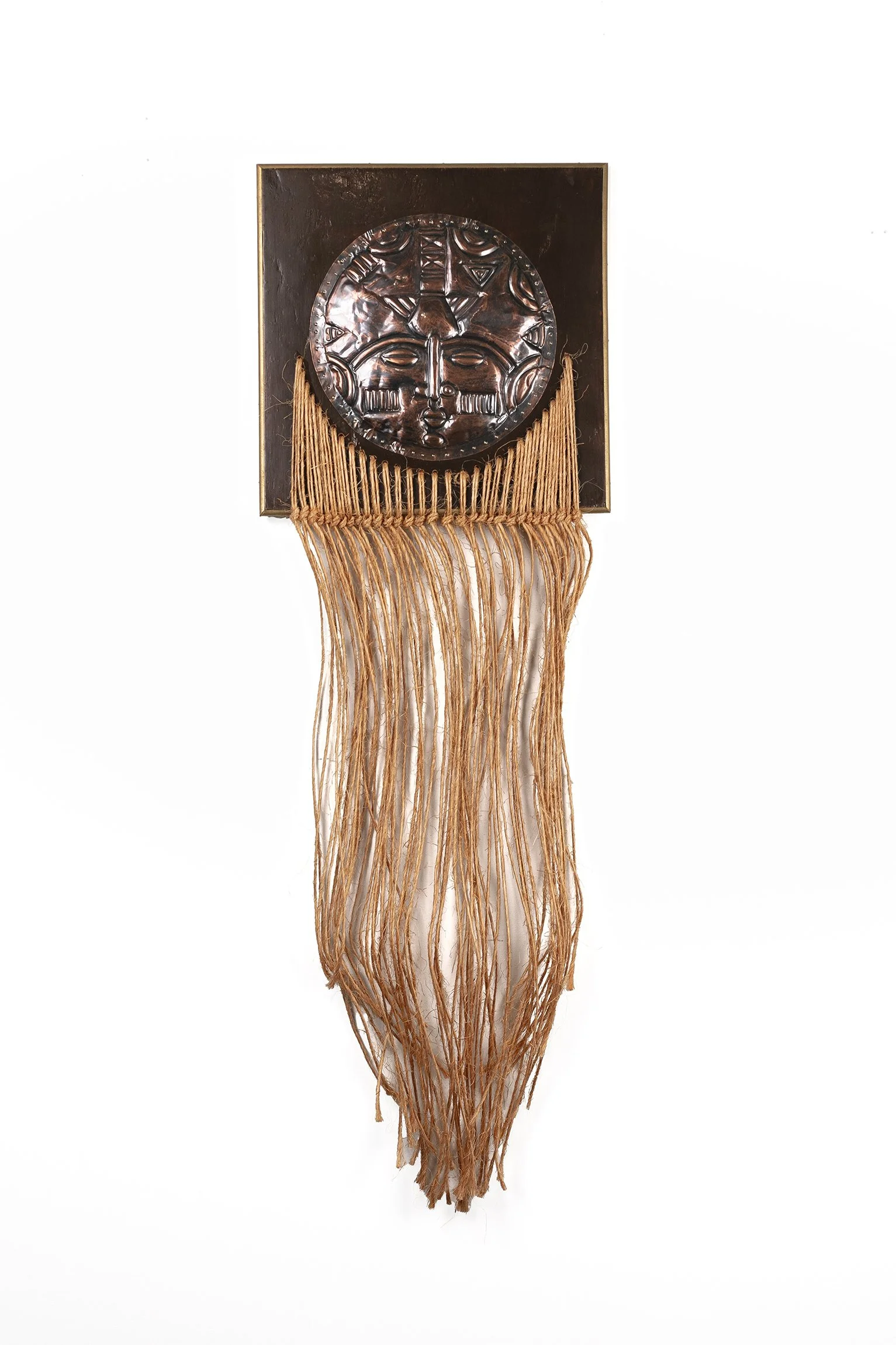
Akuaba Mask in the Tradition of the Ashanti People (Ghana)
2011
copper repoussé and twine
14 x 14 inches (copper: 10-1/2 inches diameter)
44 x 14 inches (overall size)
signed, dated, and titled on verso
Painter, printmaker, sculptor, and photographer Theodore “Ted” Jones has developed a varied artistic practice rooted in African American experience and spiritual reflection. Working across copper relief, carved wood, painting, prints, and glazed tiles, he brings questions of identity, suffering, hope, and faith into tangible form. His long career as an educator has also made him an important contributor to the artistic life of Nashville and its historically Black universities.
A native of New Orleans, Jones earned his undergraduate degree at Xavier University before completing an MA at Michigan State University and an MFA at the University of Montana. Military service brought him to the Washington, D.C., area during the early to mid-1960s. Works from this period are preserved in the Smithsonian’s Anacostia Community Museum, including Untitled #7 (1965), an abstract composition in which broad black passages meet washes of red and blue. These early works document his engagement with abstraction alongside the figurative and symbolic imagery that would become prominent in his broader practice.
Jones taught at Florida A&M University before establishing a lengthy educational career in Tennessee. He spent more than thirty-four years teaching at Tennessee State University and also served as a professor at Fisk University. His published university biography identifies Henry Ossawa Tanner, Aaron Douglas, and Jacob Lawrence as important artistic influences. It also describes a progression from work addressing racial issues toward subjects drawn from the Old and New Testaments, connecting his interest in human experience with an increasingly explicit spiritual purpose.
His copper repoussé works demonstrate the expressive possibilities of metal relief. Repoussé involves shaping sheet metal from the reverse to create raised forms; details can then be refined from the front. The resulting surfaces respond to light through alternating highlights and recesses, giving even shallow relief a strong sculptural presence. Jones’s use of copper places material, texture, and modeled line at the center of the viewing experience.
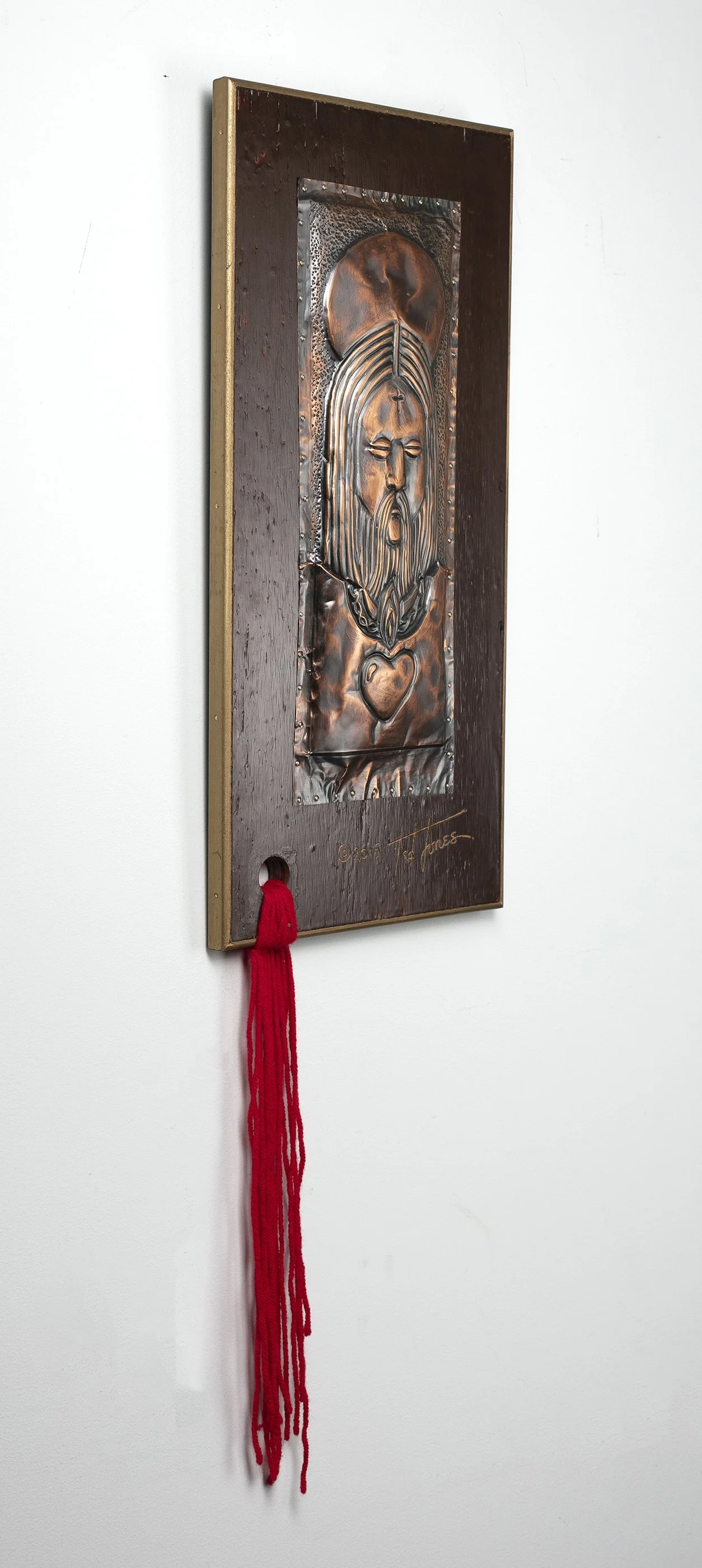
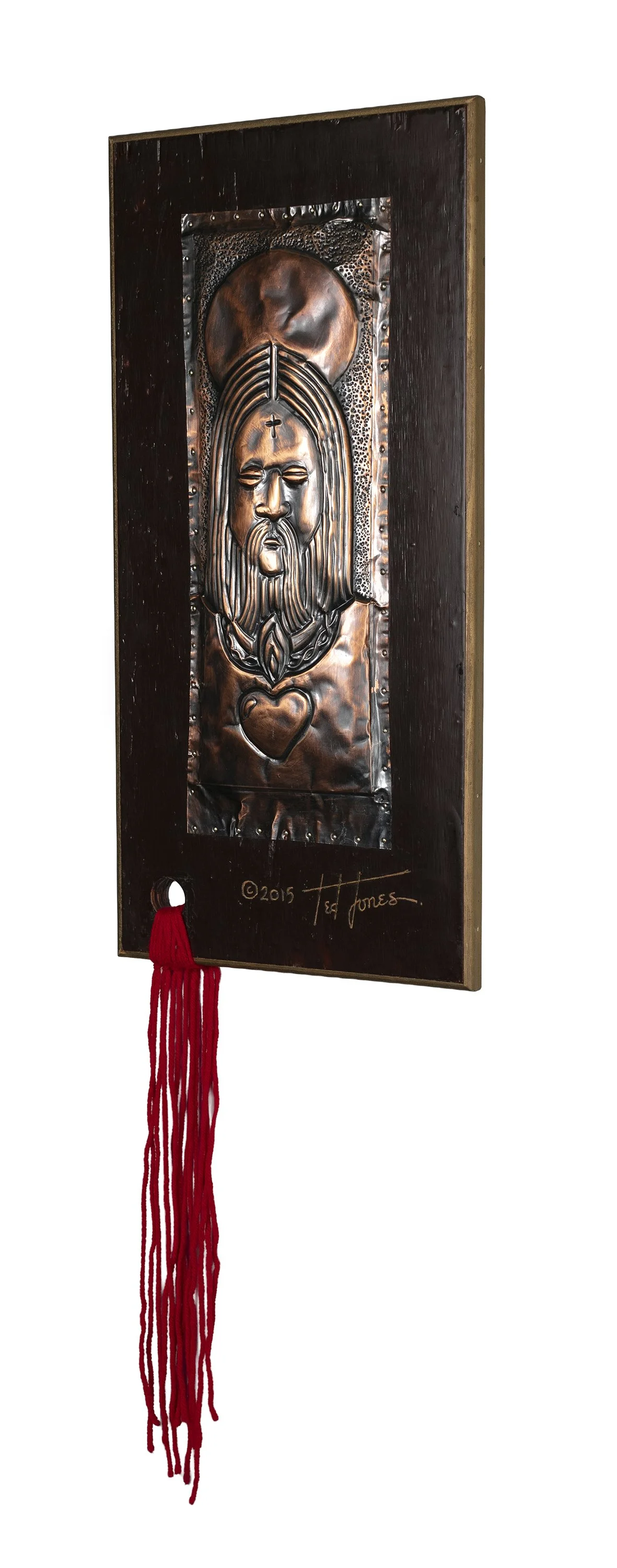
The two works presented here reveal complementary approaches to symbolic portraiture. In the circular relief, a stylized face is surrounded by rhythmic geometric motifs, while long strands of natural-colored fiber extend below the panel. The arrangement evokes the visual presence of a ceremonial mask without requiring identification with a particular cultural tradition. The second work, signed and dated 2015, presents a frontal, bearded figure with a halo, cross, and heart—imagery associated with Christ and the Sacred Heart. Its copper surface and hanging red fibers bring devotional imagery into a distinctive combination of metalwork and assemblage.
For Jones, making art is closely connected to spiritual practice. As he explained, “The studio is my chapel. The art form is my offering and prayer.” His work was presented in a varied-media exhibition at Volunteer State Community College in 2020. More recently, he participated in Embracing Blackness: Diasporic Unions at the Customs House Museum and Cultural Center in 2025 and Materiality of the Sacred at Fisk University’s Carl Van Vechten Gallery in 2026. These exhibitions situated his achievements within the continuing history of Black artistic practice in Tennessee, emphasizing the relationship between cultural inheritance, material invention, and faith.
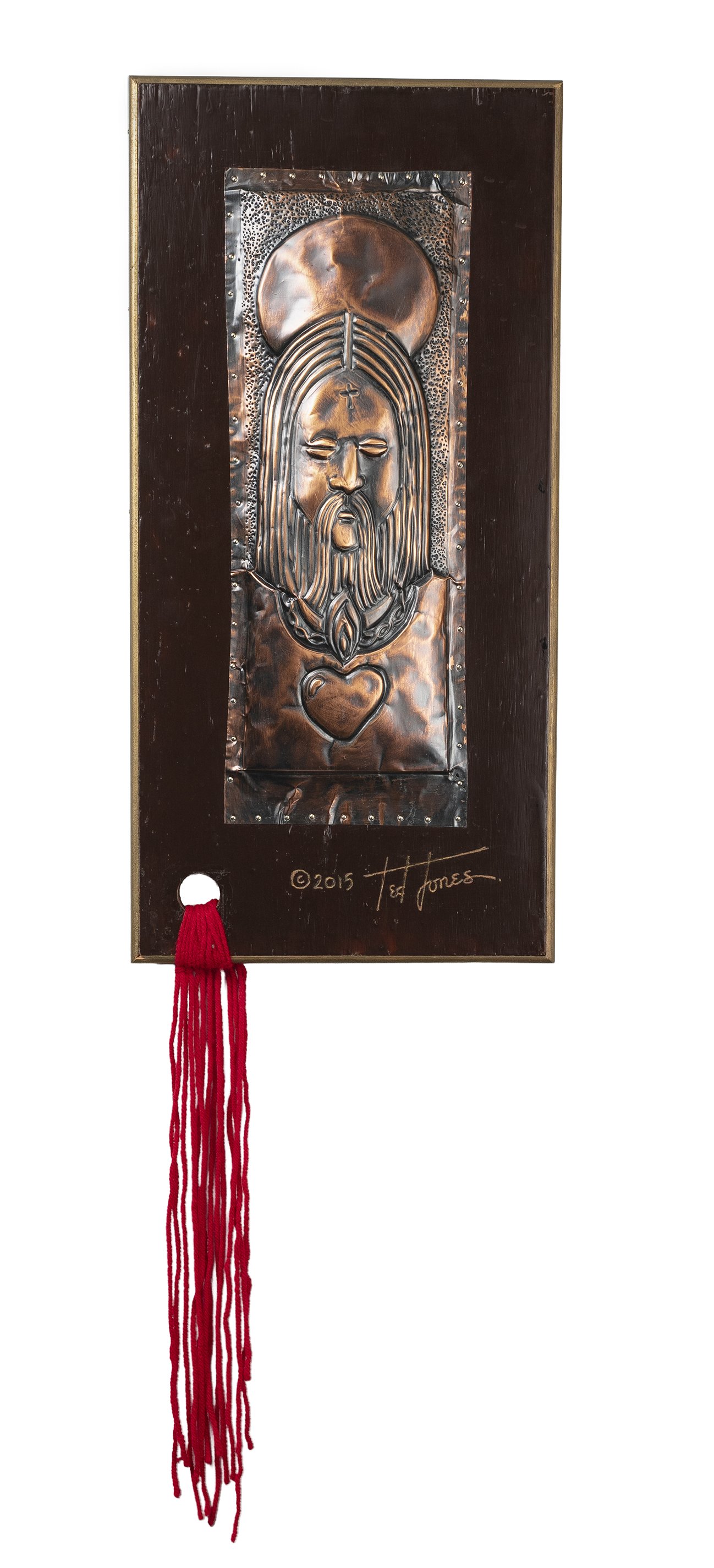
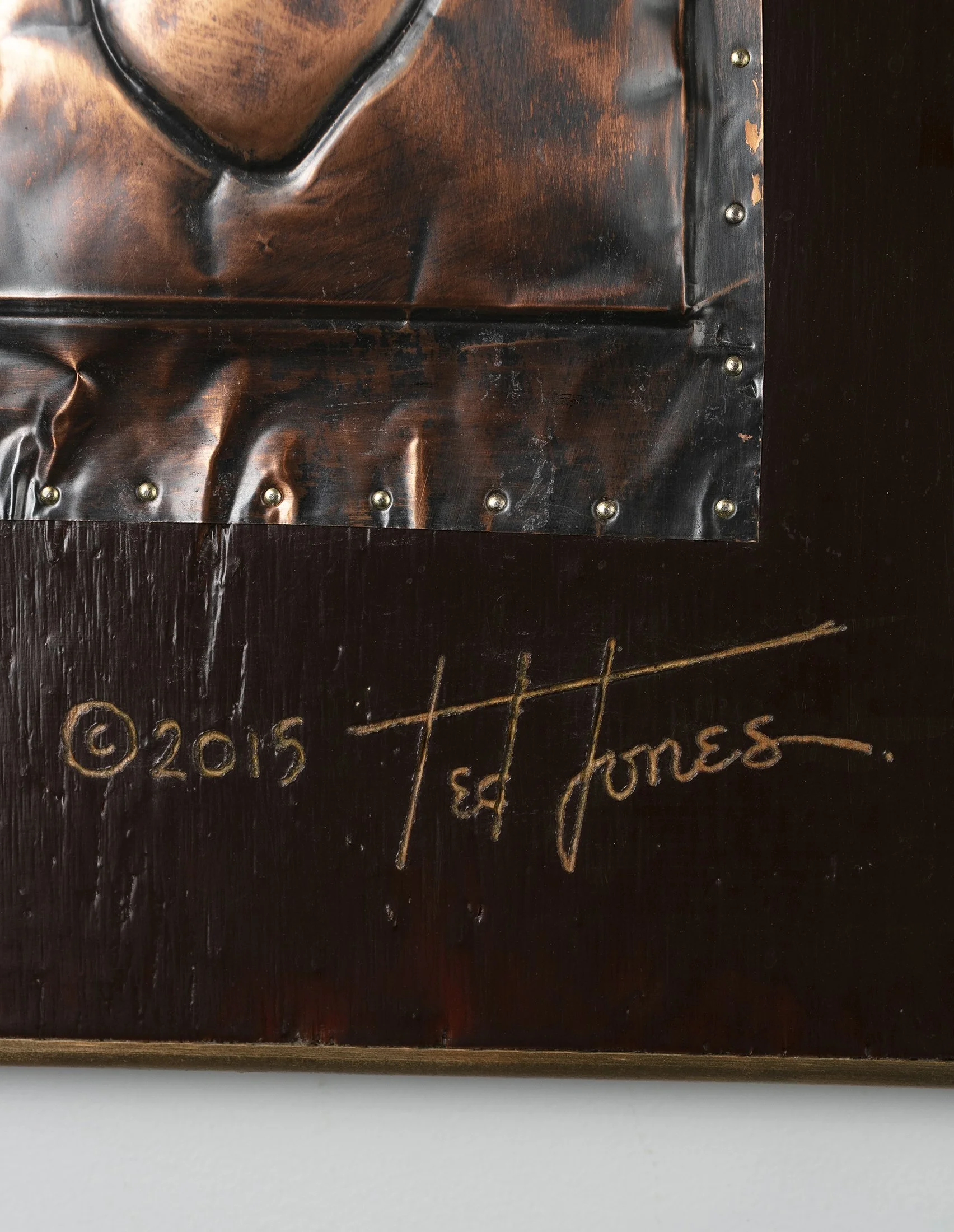
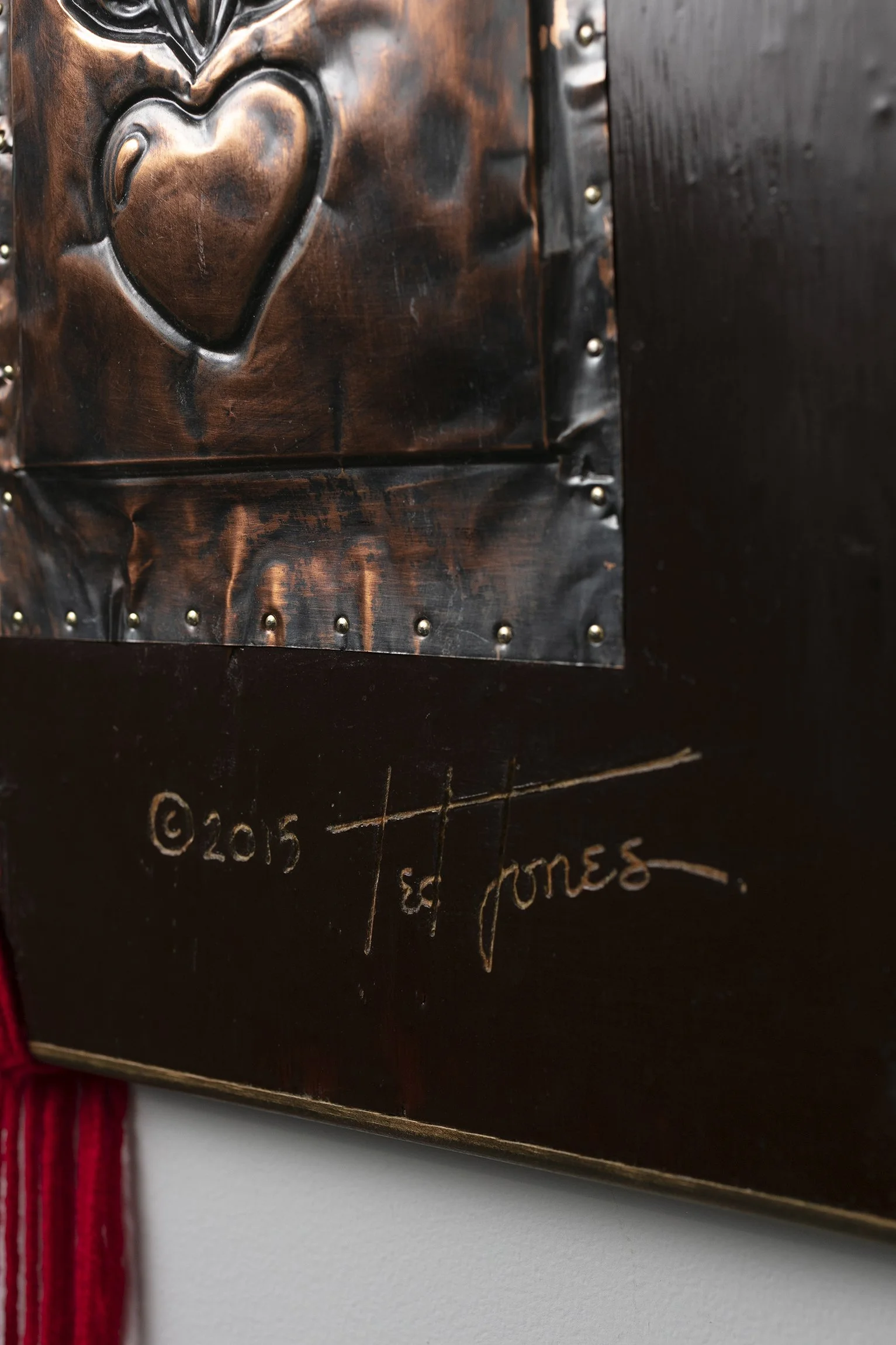
The Sacred Heart of Jesus, 2015; copper repoussé, wood and yarn assemblage, 21-1/2 x 10-1/2 inches (board only), yarn extends 14 inches below board, signed and dated, titled verso.