Gwendolyn Knight
(1913-2005)
Nuns in a Landscape
1941
gouache and watercolor on paper
12 x 17 1/2 inches
signed and dated
Painted in 1941, the year she and Jacob Lawrence were married, Nuns in a Landscape reveals the influences of highly important American modernist painters, Arthur Dove and Georgia O’Keefe, both of whom were favorites of Knight [1].
In Never Late for Heaven: The Art of Gwen Knight, curator Sheryl Conkleton notes that Knight’s early images “reveal some affinity with that of early modernists who were interested in painted equivalents for their emotional experiences. [2]
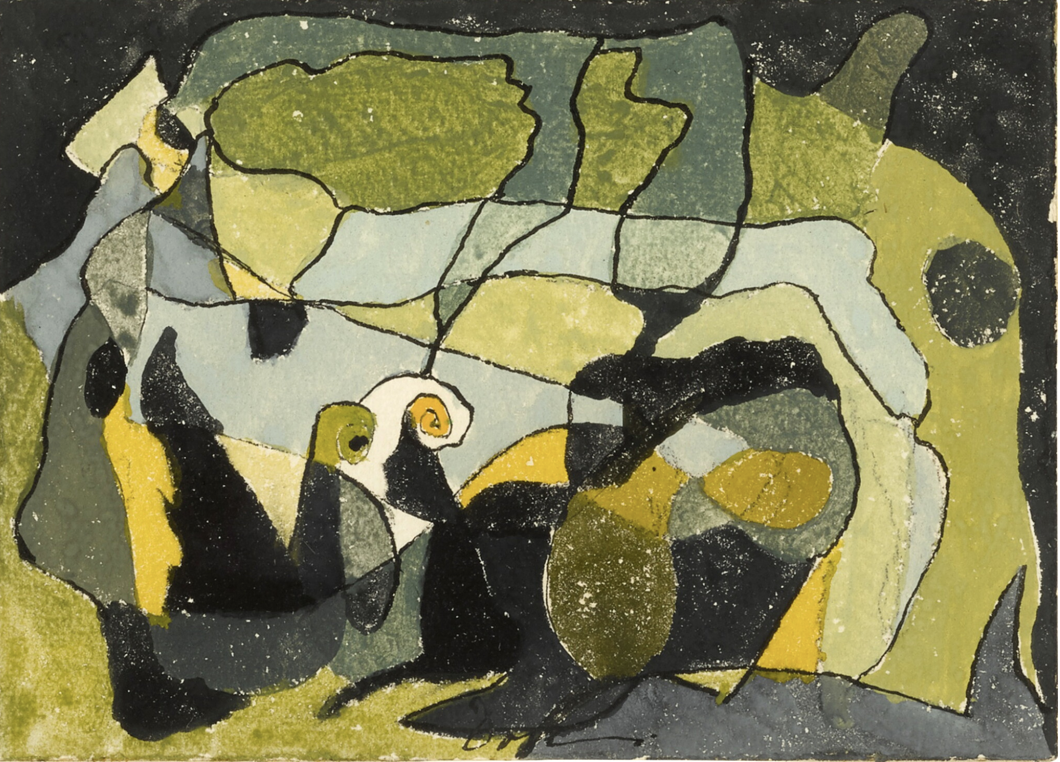
Arthur Dove (1880-1946), Nuns, 1941; watercolor and gouache on paper,5 x 7 inches,
Arthur Dove’s watercolor, Nuns, also painted in 1941, "showcases the artist’s small-scale yet masterful treatment of form and color from this distinctive and highly productive period.” [3]
Road to Pedernal (1941) illustrates Georgia O’Keefe’s interest in transforming the New Mexico landscape into a spiritual and emotional subject, and away from a literal depiction of the geography.
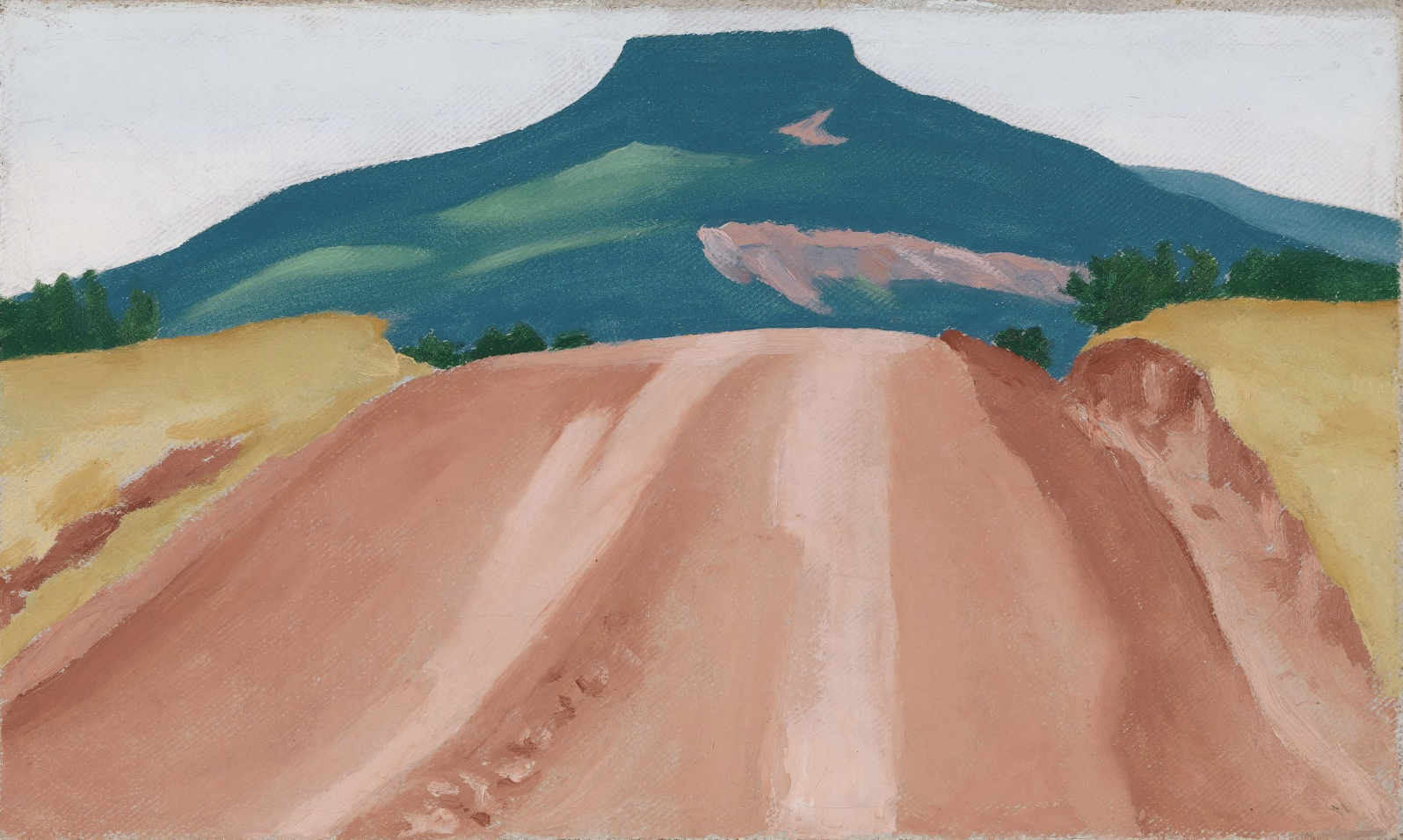
Georgia O’Keefe (1887-1986), Road to Pedernal , 1941; oil on canvas, 6-1/8 x 10 inches
As a young child in Barbados, Knight’s family participated in the Anglican communion of the Church of England, and when she came to the United States, they became Episcopalians. Gwen was attracted to the spiritualism and the rituals created to manifest that, but never fully adopted it. To a degree, natural symbols became a substitute for a traditional religious perspective. Like Dove and O’Keefe, her conception of the divine was more closely connected to Transcendentalism and a direct relationship with a spiritual universe, rather than institutional church dogmas.
In Nuns in a Landscape , Knight illustrates both the connection and the conflict between the two. Traditional icons of the church, nuns, and a crucifixion, populate the composition, alongside ethereal trees and a vague atmospheric landscape, divided in half diagonally.
Another work she painted the same year: Bayou, depicts an area of refuge surrounded by an arguably harsh environment.
It is plausible that Knight wished to present nature as a place of belonging and protection (outside of the church). She had experienced a degree of discrimination and racism in her brief experience with the church in the U.S. [4]
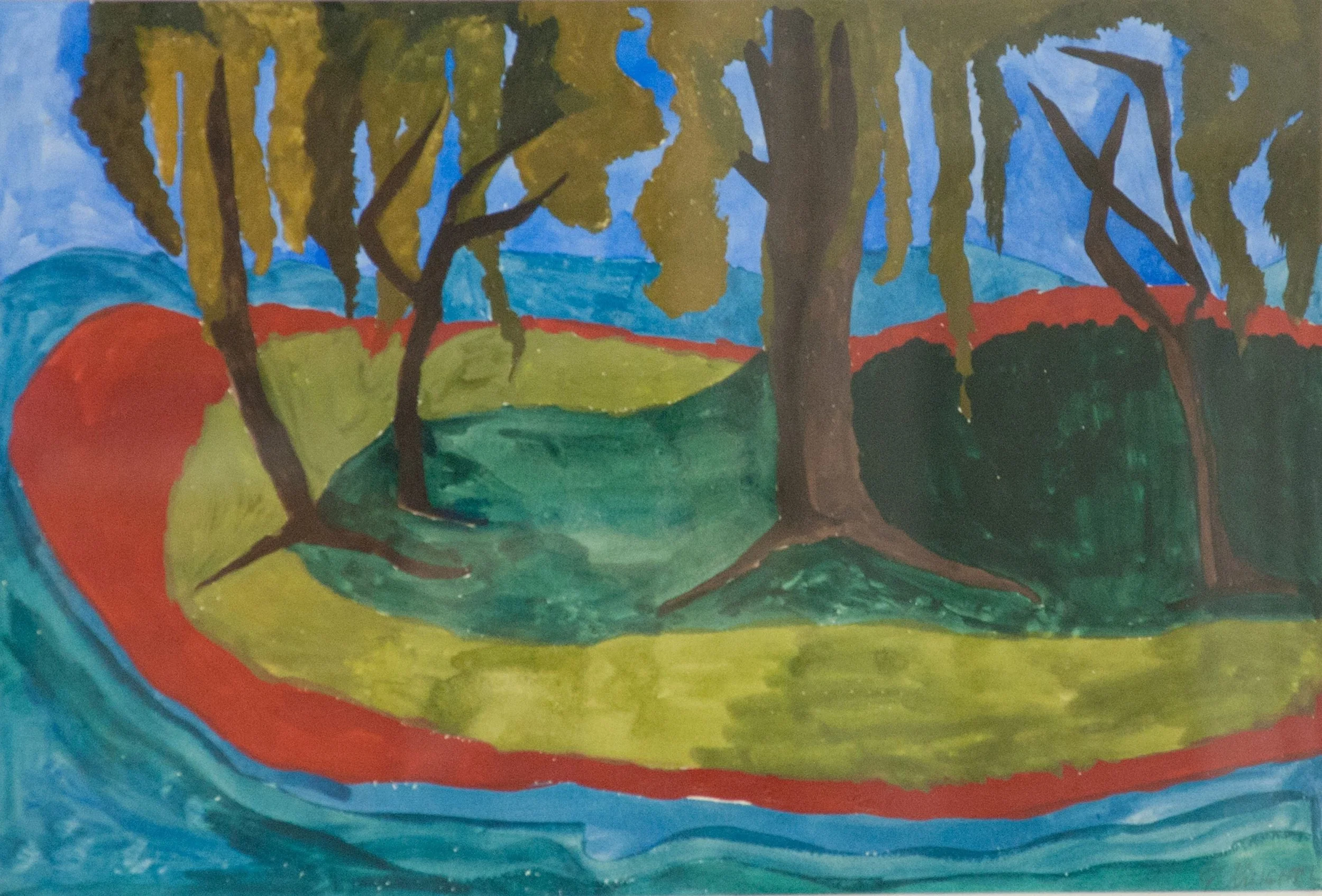
Gwendolyn Knight (1913-2005), Bayou, 1941; gouache on paper,13-1/4 x 19-1/4 inches
The theme of presenting simultaneously contrasting and related imagery was not uncommon in Knight’s earlier works, and is exemplified by the painting, Nuns in a Landscape.
1. Knight, Gwendolyn, et al. Never Late for Heaven: The Art of Gwen Knight. University of Washington Press ; Tacoma Art Museum, 2003: 13.
2. Ibid
3. Agee, William C. “New Directions: The Late Work, 1938-1946.” Arthur Dove: A Retrospective, Addison Gallery of American Art ; MIT Press, Massachusetts Institute of Technology in Association with the Phillips Collection, Washington, D.C, Andover, Mass, Cambridge, Mass, 1997.
4. Knight, Gwendolyn, et al. Never Late for Heaven: The Art of Gwen Knight. University of Washington Press ; Tacoma Art Museum, 2003: 10.
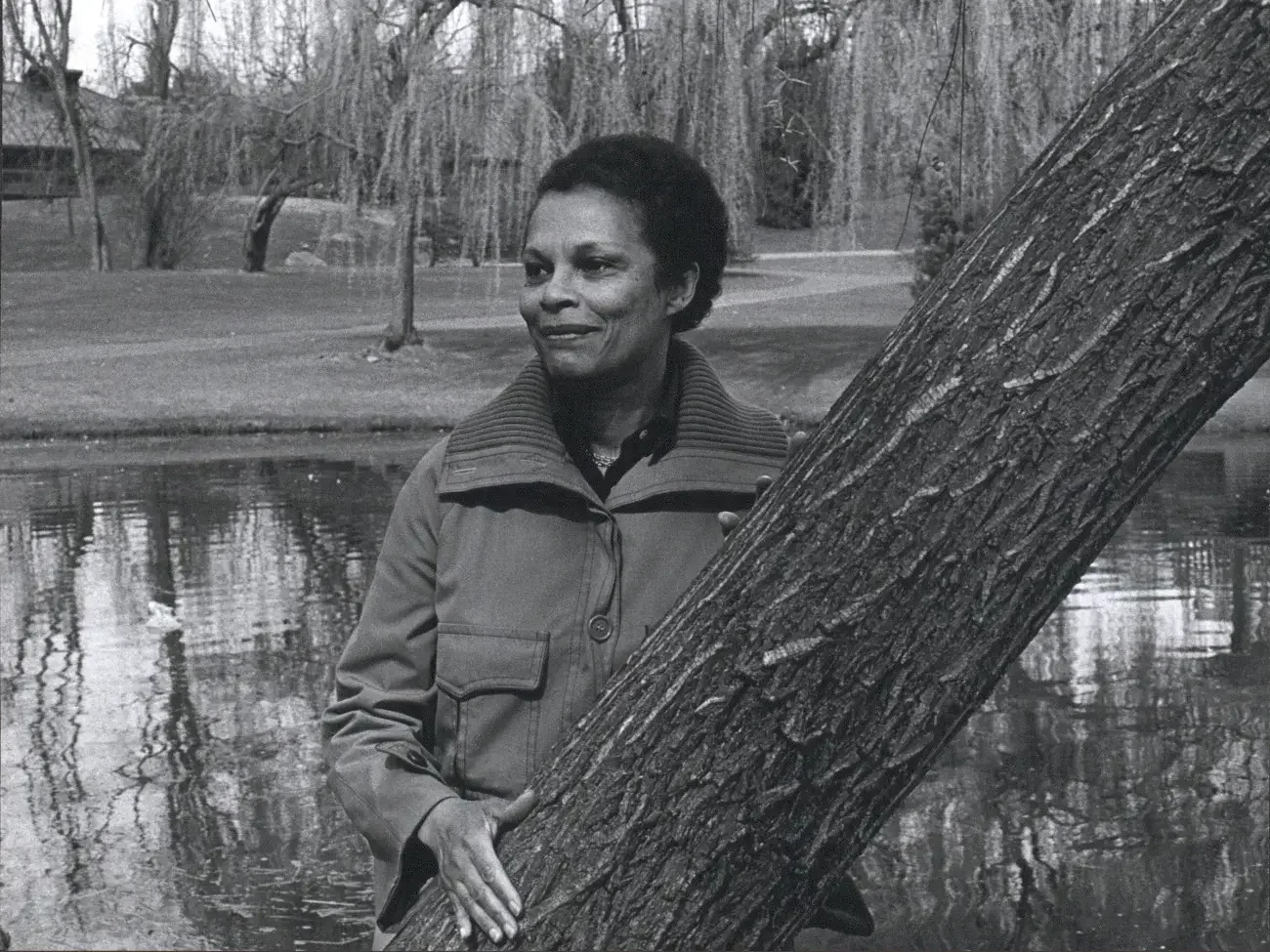
Artist Gwendolyn Knight Lawrence, photographed by Mary Randlett in 1979. (Courtesy of UW Special Collections, Mary Randlett Photographs, UW42242)
Painter, sculptor, and printmaker Gwendolyn Knight-Lawrence developed a personal approach to figurative art, distinguished by expressive color, fluid drawing, and a sensitivity to movement. Her portraits, studies of dancers, landscapes, and images of animals reflect an attentive engagement with the world around her. Throughout a career extending from the Harlem Renaissance to Seattle’s flourishing artistic community, she maintained an independent vision grounded in observation, imagination, and the pleasures of making art.
Born in Bridgetown, Barbados, in 1913, Knight moved to the United States with family friends at the age of seven. She initially lived in St. Louis before settling in Harlem in 1926. There, the neighborhood’s vibrant literary, musical, and theatrical life encouraged her developing interests. She attended Howard University, studying with painter Loïs Mailou Jones and printmaker James Lesesne Wells, but financial difficulties during the Depression forced her to leave after two years and return to New York.
In Harlem, sculptor Augusta Savage became an important mentor, providing instruction, encouragement, and an example of a Black woman pursuing a professional artistic life. Through Savage’s workshop, Knight entered a community that included Charles Alston, Romare Bearden, Langston Hughes, and other leading cultural figures. She subsequently worked on a Works Progress Administration mural project, assisting Alston at Harlem Hospital. In Alston’s studio she met Jacob Lawrence, whom she married in 1941. Their partnership lasted fifty-nine years, encompassing mutual encouragement and sustained dialogue about their work.
Dance remained an enduring source of inspiration. During the couple’s summer at Black Mountain College in 1946, Knight offered informal dance instruction while engaging with the college’s experimental artistic environment. Back in New York, she studied with the New Dance Group and pursued design classes at the New School for Social Research. These experiences strengthened the connection between bodily movement and pictorial rhythm in her work. A visit to Nigeria with Lawrence in 1964 further enriched her engagement with African culture and her own heritage.
Knight’s art often began with people close to her: friends and acquaintances who posed at home or in the studio. Through vivid greens, reds, and blues, she conveyed personality and atmosphere with an increasingly spontaneous touch. In later years, etchings, screenprints, and monoprints offered fresh possibilities for experimentation. Some prints revisited earlier paintings, while others explored animals and dancing figures through economical, lyrical marks. Improvisation became particularly important, allowing gesture and movement to carry much of an image’s expressive force.
The Lawrences settled in Seattle in 1971, when Jacob joined the University of Washington faculty. Knight became active in the city’s cultural life and gained representation through Francine Seders Gallery. Her first solo exhibition took place at the Seattle Art Museum in 1976. Broader recognition followed, culminating in the 2003 Tacoma Art Museum retrospective Never Late for Heaven: The Art of Gwendolyn Knight, accompanied by a substantial publication by Sheryl Conkleton and Barbara Earl Thomas.
Knight died in Seattle in 2005. Her work is held in collections including the Museum of Modern Art, Tacoma Art Museum, Saint Louis Art Museum, and Seattle Art Museum. Her commitment to supporting artists continues through the Seattle Art Museum’s Gwendolyn Knight and Jacob Lawrence Prize, which provides a monetary award and solo exhibition to a promising Black artist. Her legacy encompasses both a distinctive body of art and a lasting contribution to the communities in which she lived and worked.