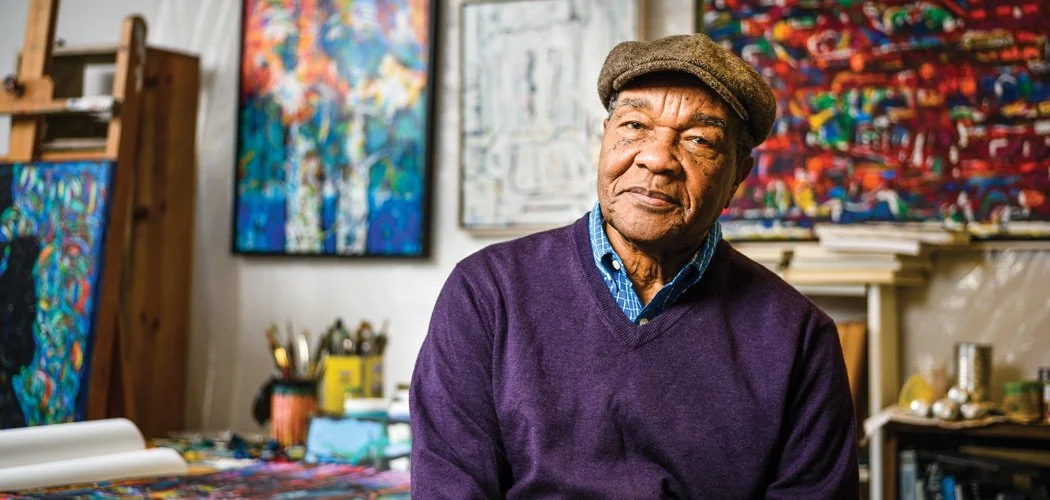
David Driskell
(1931-2020)
The "Maine Suite" refers to a series of prints that revered artist and art historian David C. Driskell created in Falmouth, Maine, in collaboration with master printer Curlee R. Holton at Raven Fine Art Editions. The works were first exhibited at the Center for Maine Contemporary Art.
Jacob Wrestling with the Angel
2015
linocut
15-1/2 x 11-1/2 inches (image)
21 x 15 inches
David C. Driskell (1931–2020) helped transform the understanding of American art through a lifetime devoted to creating, teaching, and preserving the work of African American artists. His contributions as a painter, curator, and scholar grew from a shared conviction: that Black artistic achievement was essential to the nation’s cultural history. Born in Eatonton, Georgia, and raised in North Carolina, Driskell developed this commitment at Howard University, where James A. Porter encouraged him to bring historical scholarship into conversation with his studio practice. He graduated in 1955, having also studied at the Skowhegan School of Painting and Sculpture in Maine, and earned his MFA from the Catholic University of America in 1962.
Teaching became an important extension of that commitment. Beginning at Talladega College, Driskell went on to hold influential positions at Howard and Fisk universities before joining the University of Maryland, College Park, in 1977. At Fisk, where he chaired the art department and directed the Carl Van Vechten Gallery, his work brought teaching, collecting, and curating into close relationship. These experiences helped prepare him for the landmark exhibition Two Centuries of Black American Art: 1750–1950, which opened at the Los Angeles County Museum of Art in 1976 and traveled nationally. Through the exhibition and its accompanying catalogue, Driskell presented the breadth of African American artistic achievement to a wide audience, challenging its longstanding exclusion from mainstream accounts of American art.
Alongside this public work, Driskell sustained an inventive and deeply personal artistic practice. His paintings, collages, and prints brought modernist experimentation together with memories of the South, the spiritual traditions of the Black church, and African imagery. Moving between recognizable subjects and abstraction, he used expressive color, rhythmic line, and layered surfaces to explore connections among nature, history, and ancestral presence. Masklike faces and religious imagery recur throughout his work, while paintings such as Behold Thy Son (1956), his response to the murder of Emmett Till, reveal the powerful relationship between spiritual expression and historical witness in his art.
Driskell’s legacy continues through both his scholarship and his art. Awarded the National Humanities Medal in 2000, he was honored the following year by the establishment of the David C. Driskell Center at the University of Maryland, dedicated to African American art and the art of the African diaspora. The traveling survey David Driskell: Icons of Nature and History (2021–2022) brought renewed attention to the range of his paintings and works on paper, affirming the significance of a creative life that remained active alongside his extraordinary service to other artists. His lasting achievement lies in the connection between these endeavors: he helped preserve a history while contributing his own distinctive vision to it.
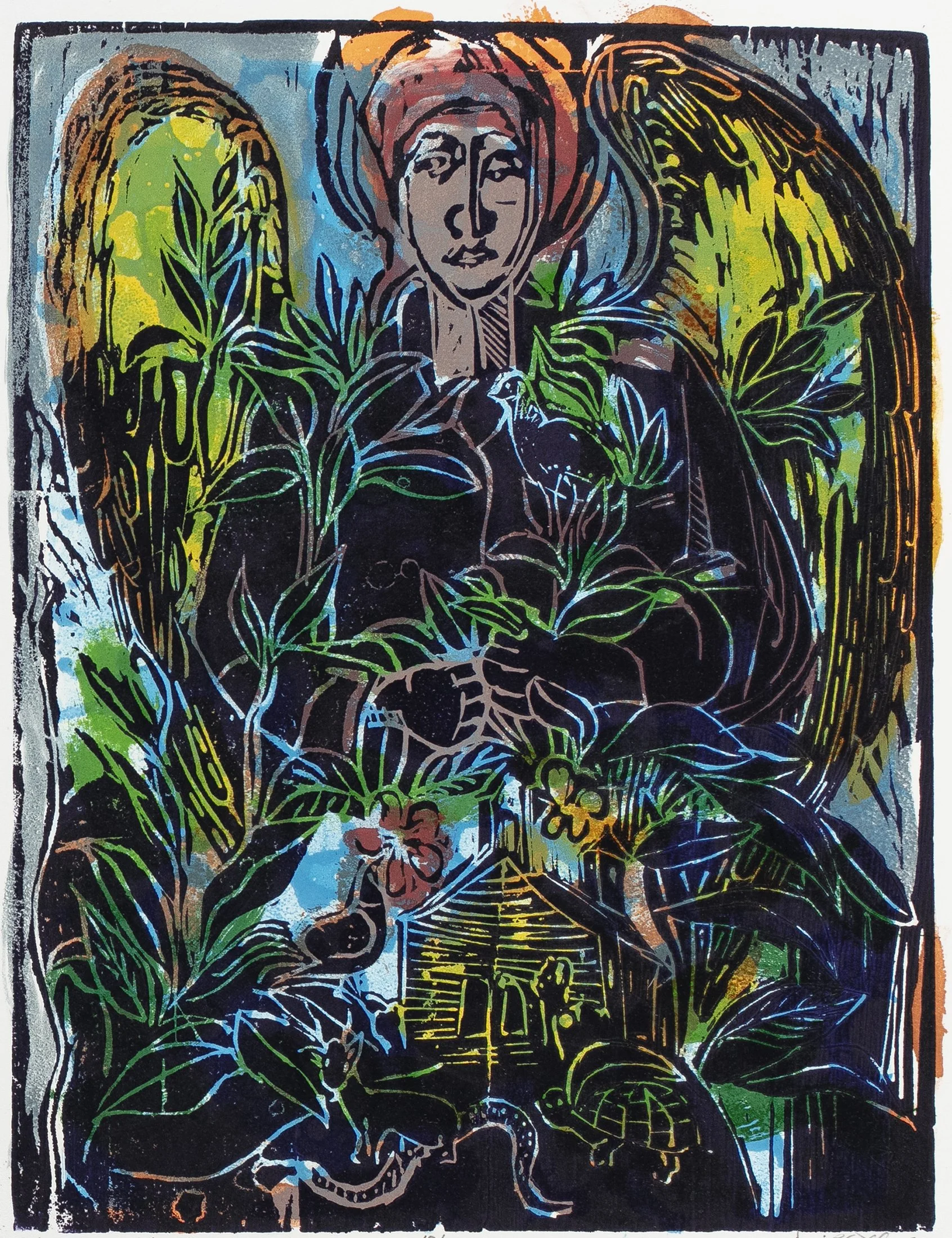
The Guardian, 2012; linocut, 14-3/4 x 11-3/4 inches (image), 21 x 15 inches (sheet), signed, dated, titled and numbered 10/30.
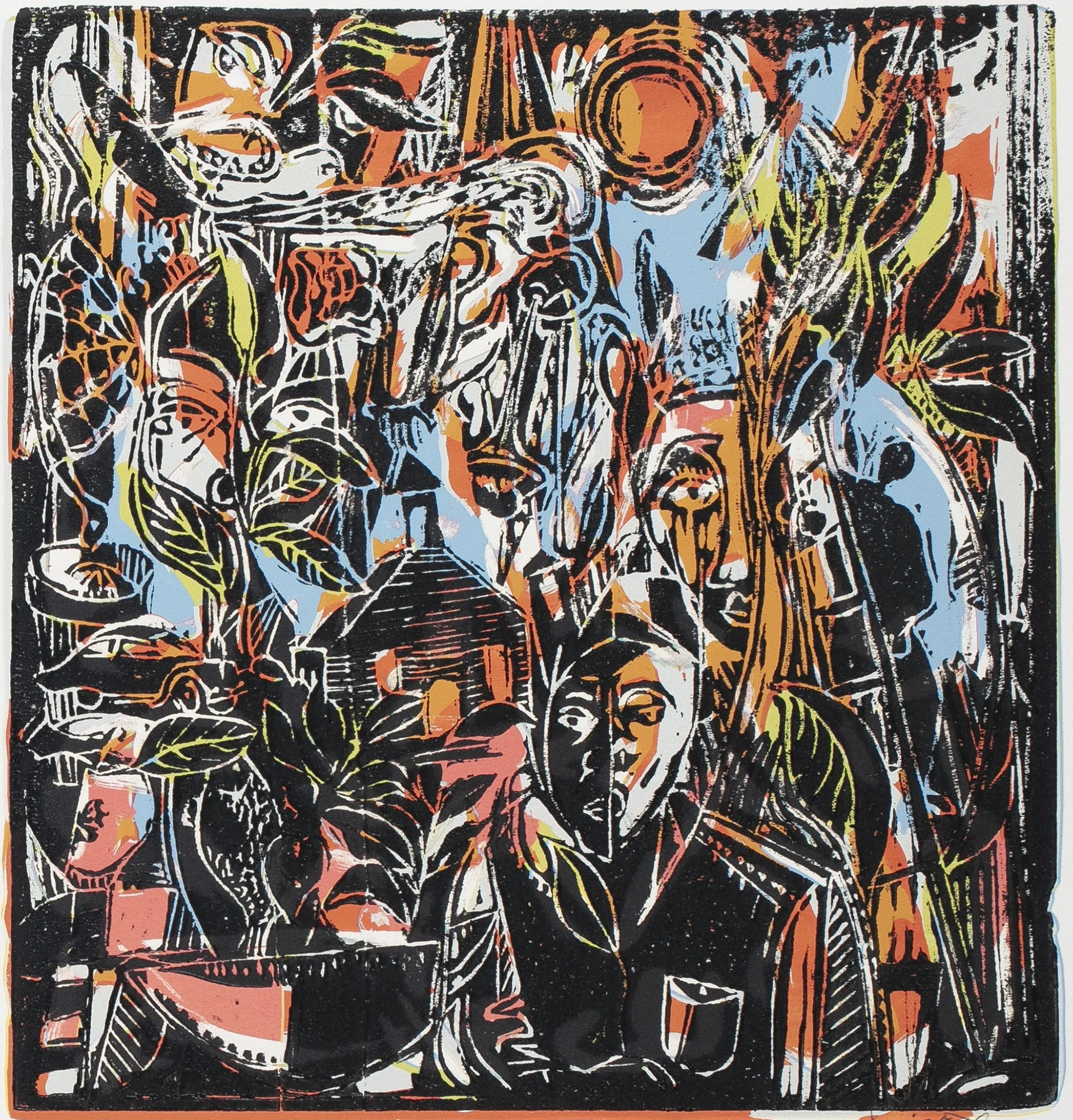
The Legend, 2013; linoleum cut print, 12 x 11-1/4 inches (image), signed, dated, titled, and numbered 10/30.
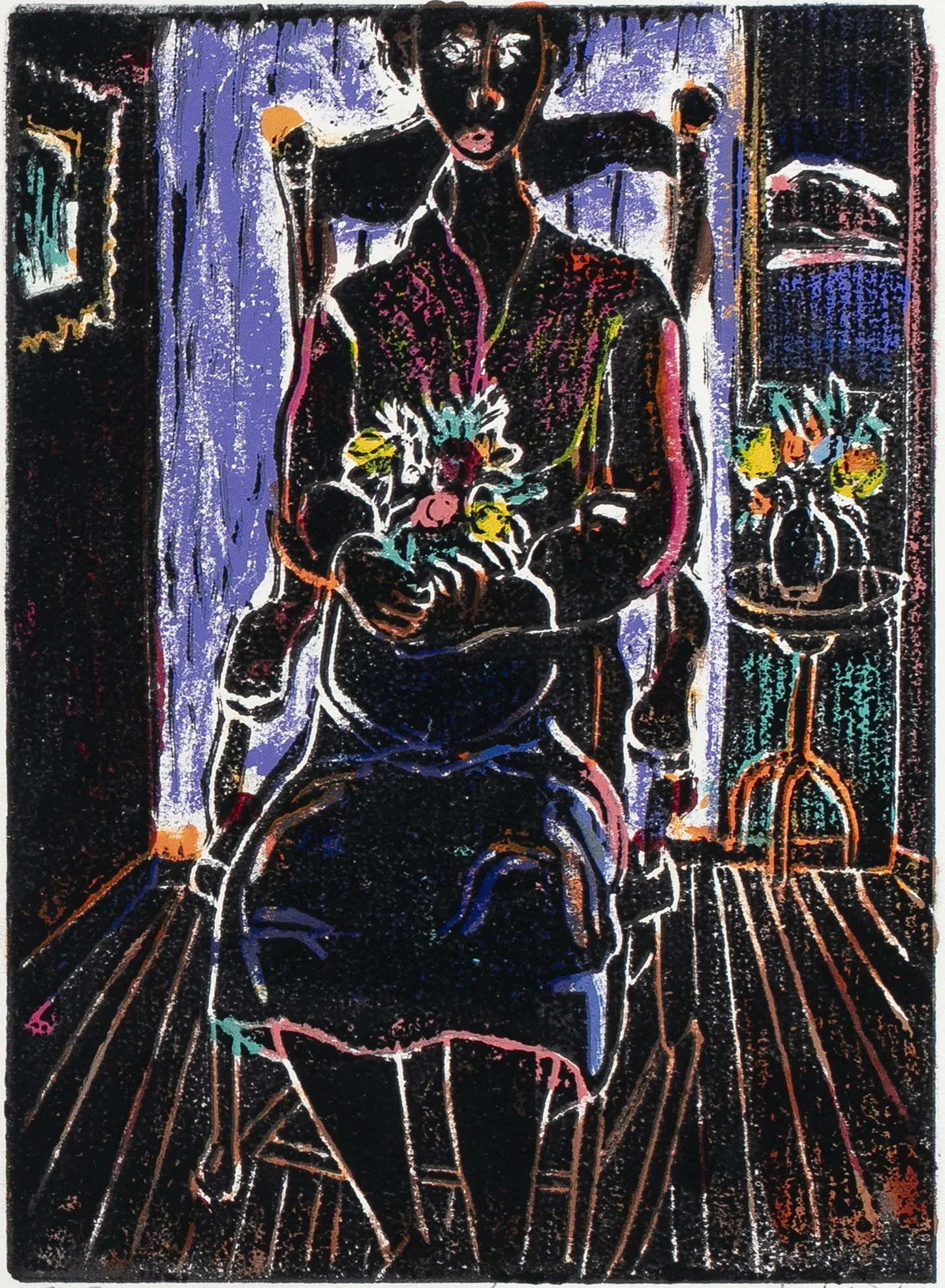
The Rocker, 2012; linocut, 21 x 15 inches (sheet), signed, dated, titled, and numbered, 10/30.
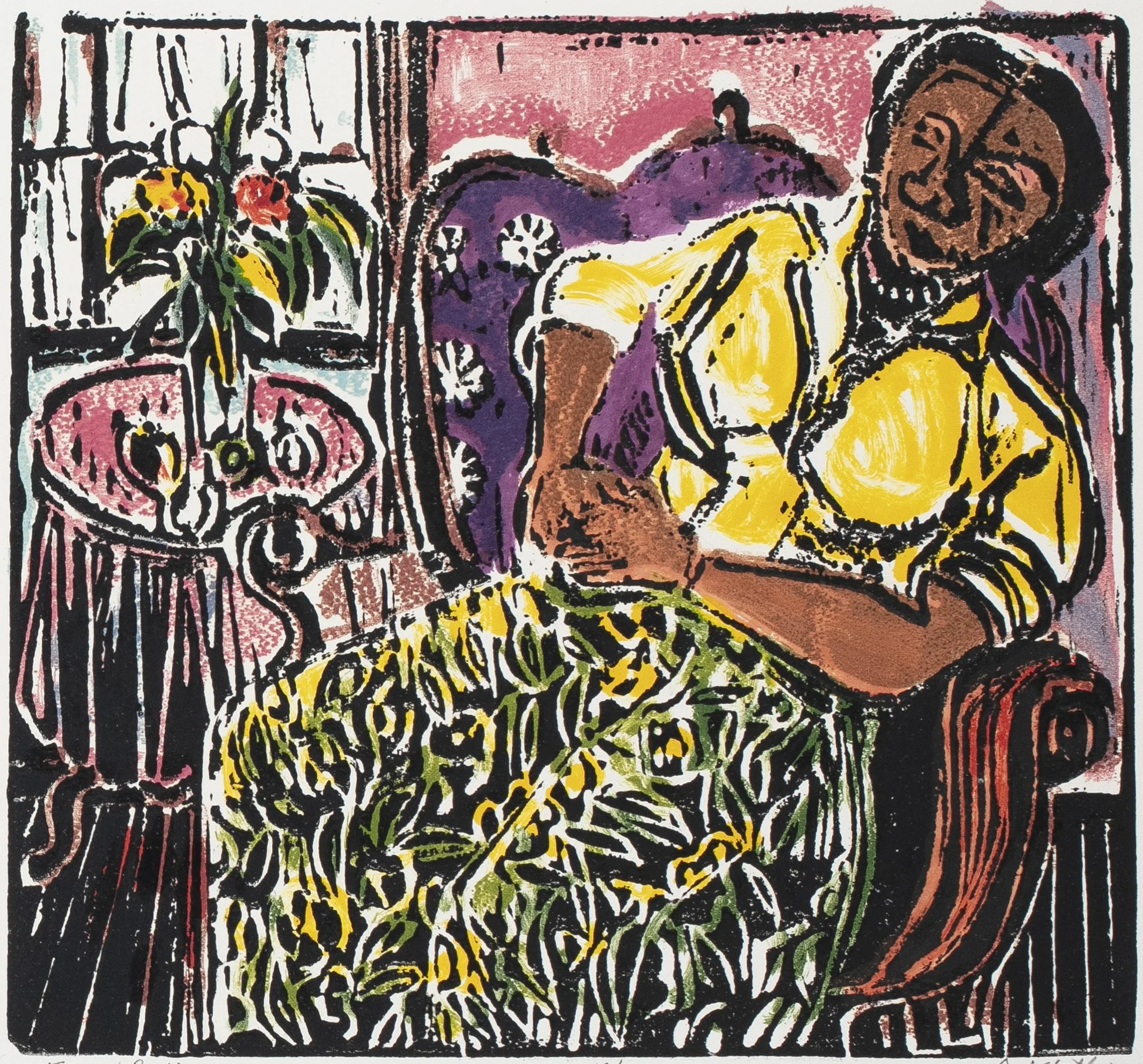
Woman Resting, 2010; linocut, 10-1/2 x 11 inches (image), 20 x 15-1/4 inches (sheet), signed, dated, titled and numbered 10/30.