Freddie Styles
(b. 1944)
Landscape in Red, Black, White, Silver I
2000
acrylic, metallic paint, and collage on paper
18 x 24 inches
signed and dated
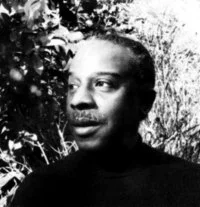
Freddie Styles is an African American painter and collage artist whose abstractions reflect a lifelong engagement with nature. Born in Madison, Georgia, in 1944, Styles grew up in the segregated South, where gardening, exploring the woods, and observing the rhythms of rural life provided an enduring foundation for his art. Across a career spanning more than six decades, he has developed a distinctive visual language that translates the textures, structures, and cycles of the natural world into richly layered compositions. He attended Morris Brown College in Atlanta from 1962 to 1965.
Styles’s early work included portraits and figurative paintings that addressed African American identity and personal experience. In Woman in a White Dress (1968), for example, he presented a Black woman whose luminous presence conveyed beauty and dignity in the face of adversity. Over time, he turned increasingly toward abstraction, finding in nature a means of moving beyond painful experiences while retaining an emotional connection to his subjects. His paintings evoke growth, renewal, and transformation through color and form. Eddie’s Fantasy (1986), a triptych created during the AIDS crisis, demonstrates that this abstract vocabulary could also convey deeply personal responses to loss and mortality.
An avid gardener, Styles brings the natural world directly into his working methods. In his Working Roots paintings, he used azalea roots to apply paint, allowing their branching structures to shape the resulting marks. He has likewise employed pine needles as painting tools, producing intricate surfaces that connect gesture with the physical characteristics of vegetation. Nature supplies both the inspiration for these works and the instruments through which they take form.
Styles also developed an inventive process using crumpled, coated fax paper to transfer ink onto prepared paper surfaces. Repeated impressions, layered color, and metallic inks produce compositions that suggest branching networks, foliage, and organic movement. These methods balance deliberate arrangement with unpredictable effects, allowing the materials to participate in the image’s development. The resulting works offer an abstract interpretation of nature’s underlying structures and its capacity to evoke spiritual experience.
Alongside his studio practice, Styles has contributed substantially to Atlanta’s artistic community. He served as director of City Gallery East and held artist residencies at Clark Atlanta University, Clayton State University, and Spelman College. In 2001, a King Baudouin Foundation cultural exchange grant supported work and study in Belgium. In 2018, the Georgia Museum of Art awarded him the Larry D. and Brenda A. Thompson Award, recognizing his significant contributions to the visual arts and his longstanding connections to Georgia.
Recent recognition includes Uncommon Nature: The Abstractions of Freddie Styles, presented at the University of Maryland Global Campus in 2025. Guest curator Kerry Davis assembled approximately fifty works tracing six decades of Styles’s artistic development. The exhibition was subsequently presented at Clark Atlanta University Art Museum from February 12 through May 1, 2026. His work is held in numerous institutional collections, including the High Museum of Art, the Museum of Contemporary Art of Georgia, Spelman College Museum of Fine Art, Clark Atlanta University Art Museum, and the Smithsonian National Museum of African American History and Culture, which holds Pine Needle Series—Blue (2015).