Donald Locke
(1930-2010)
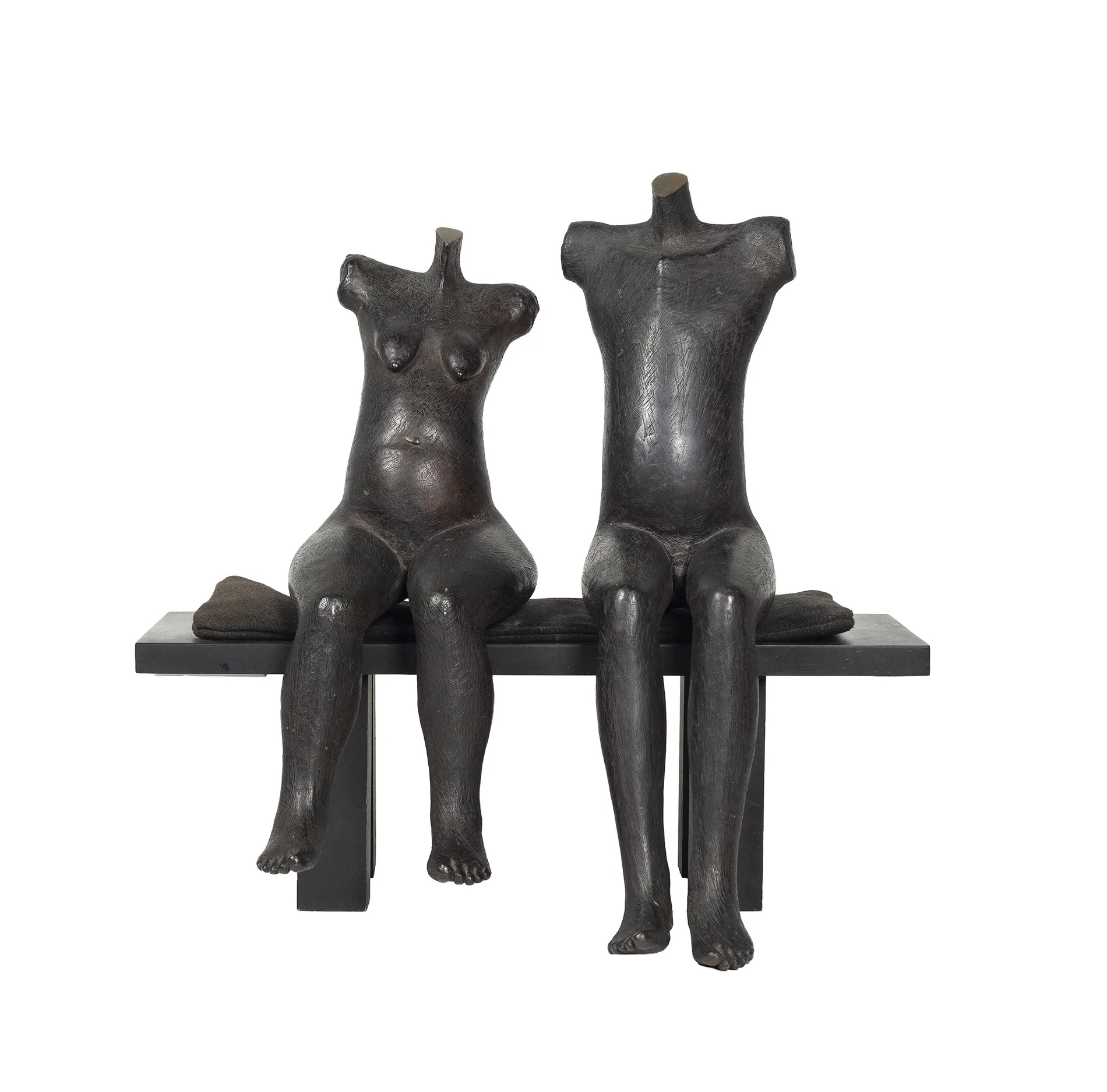
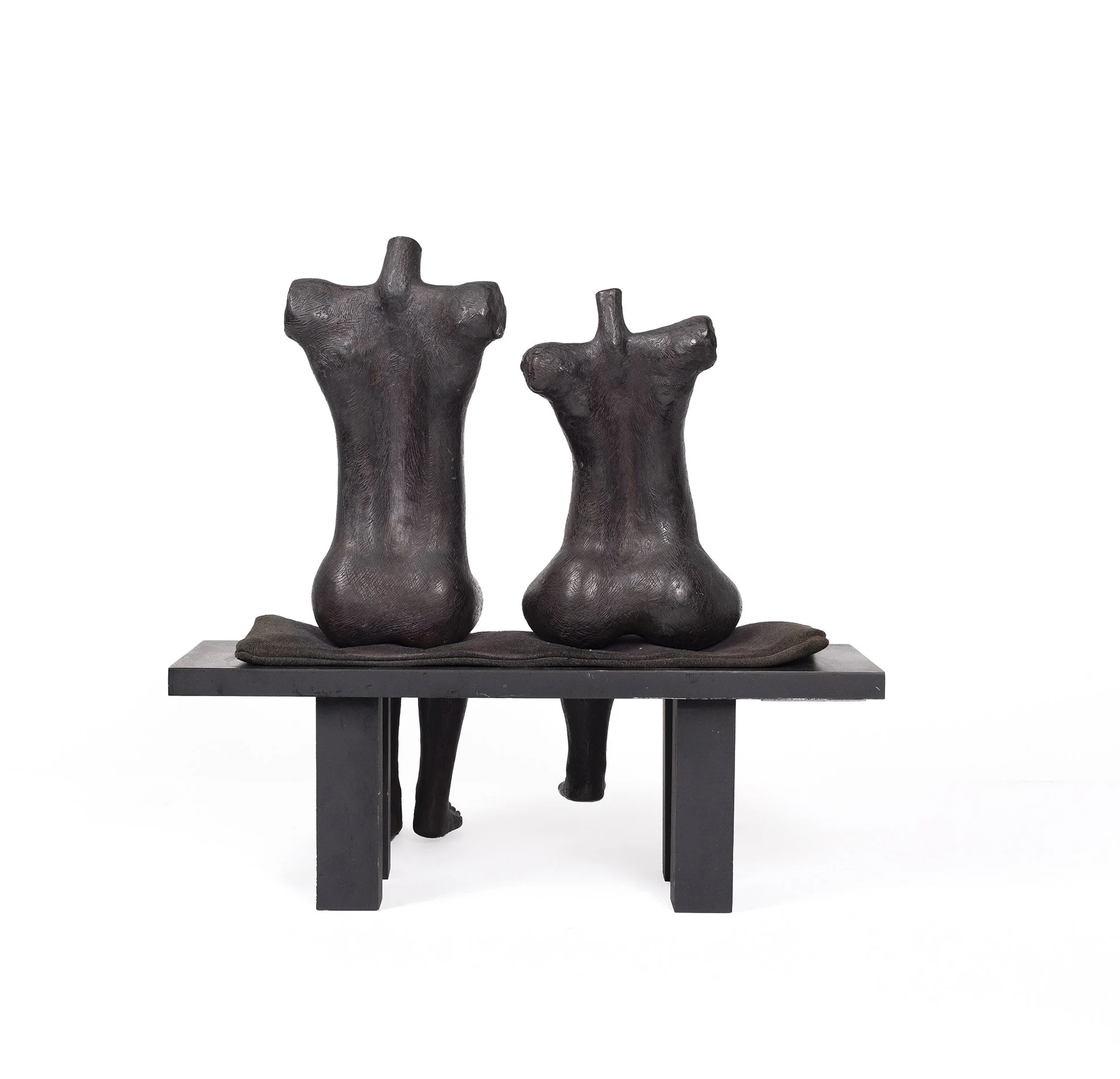
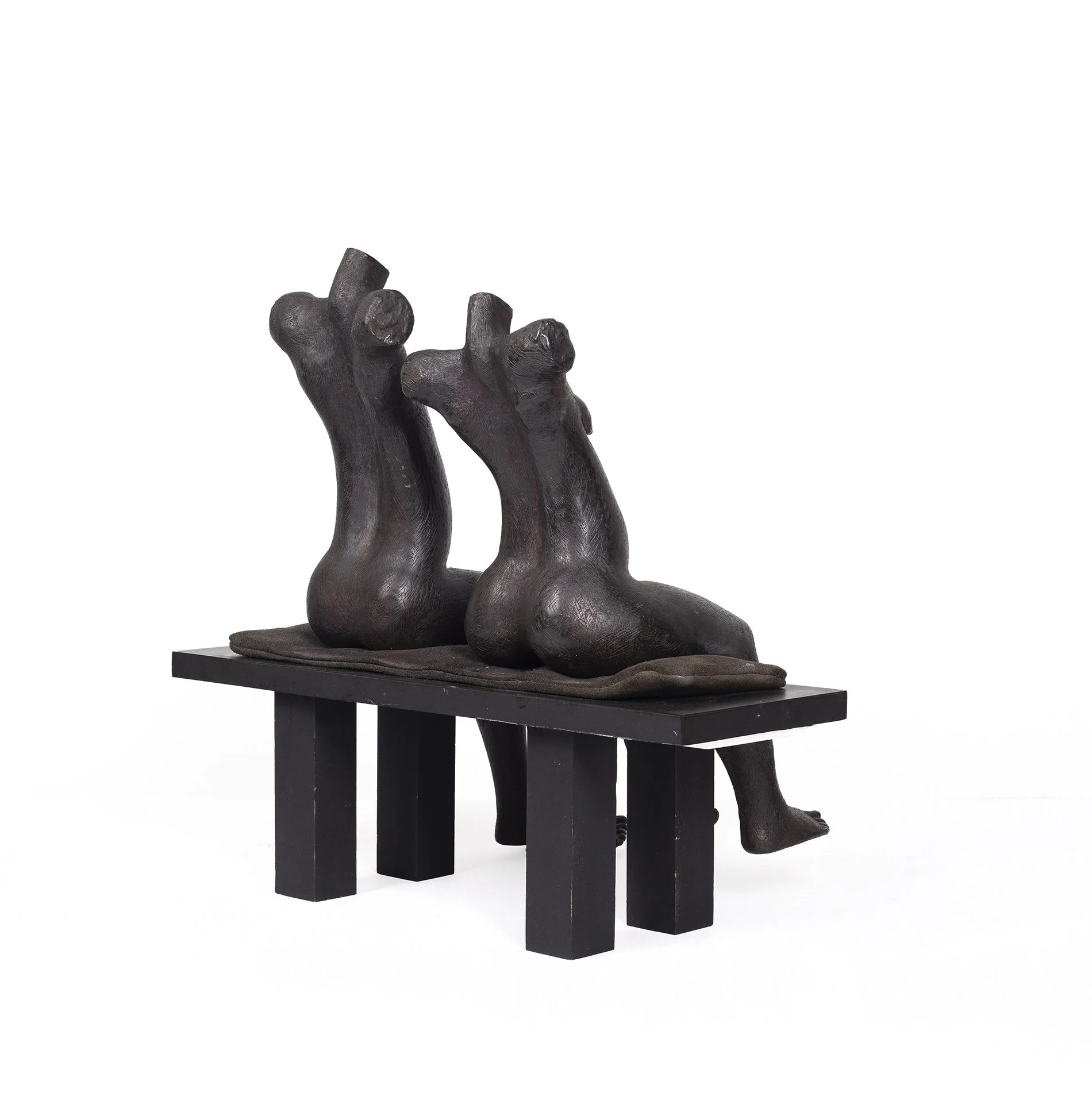
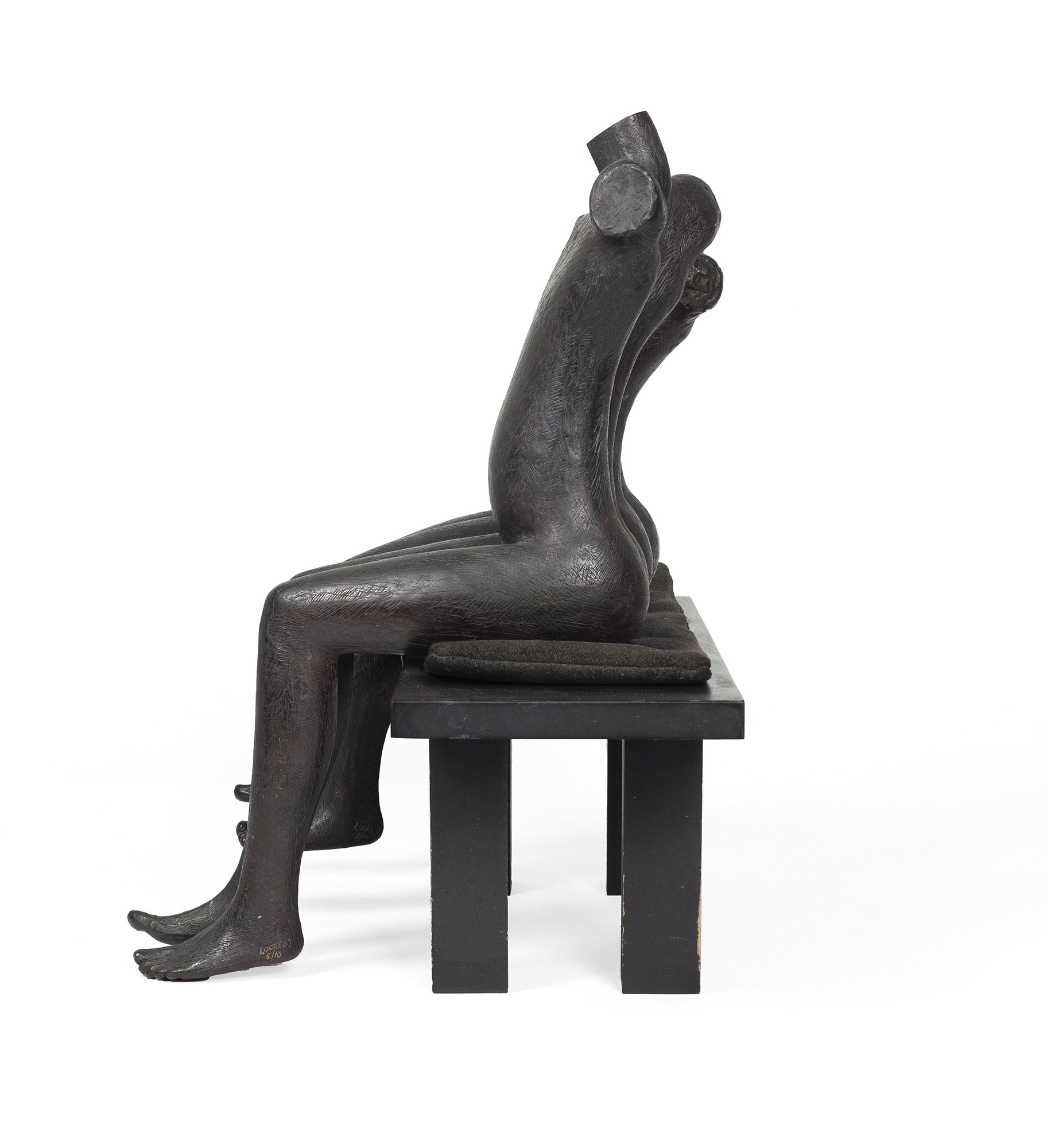
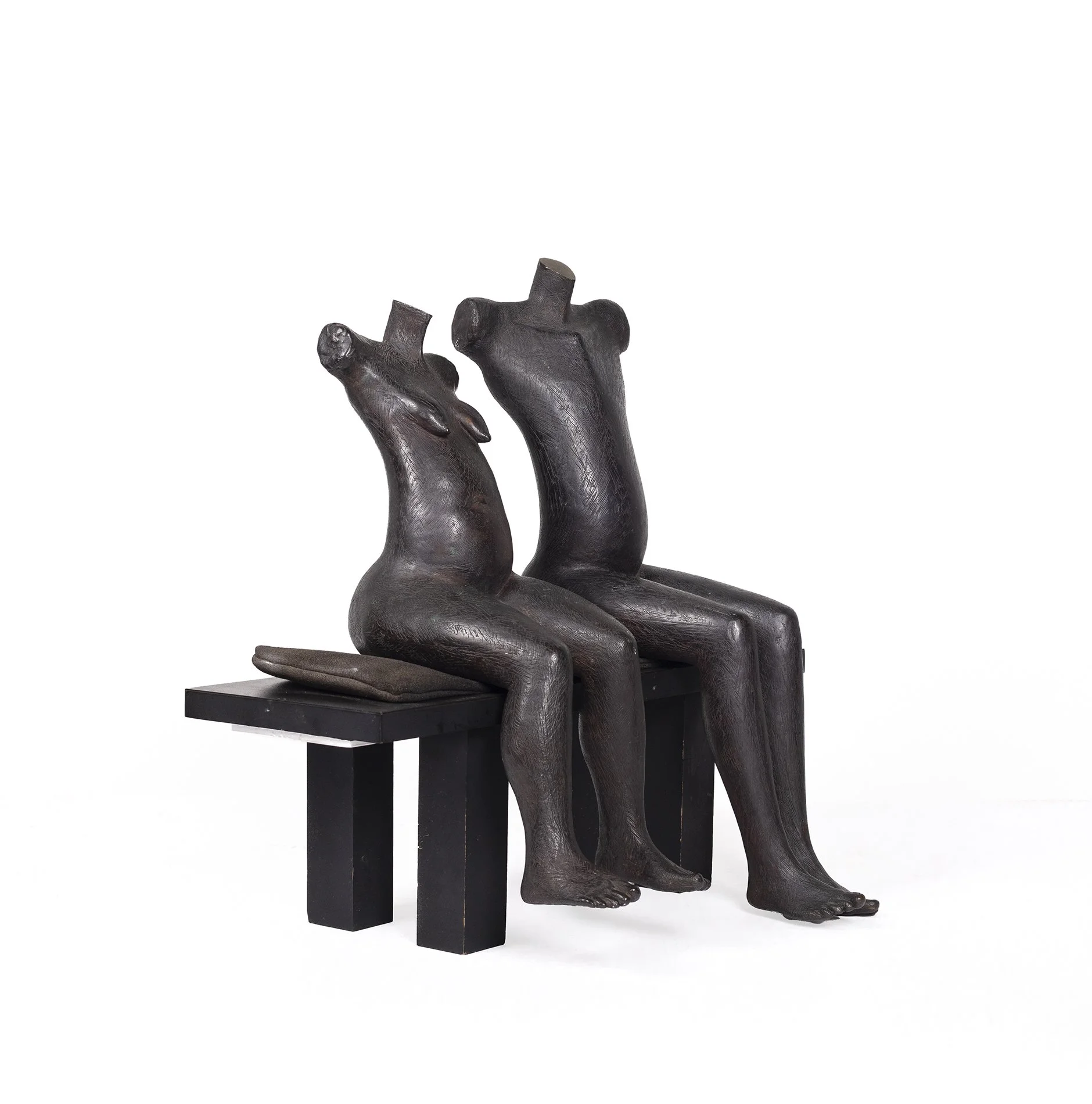
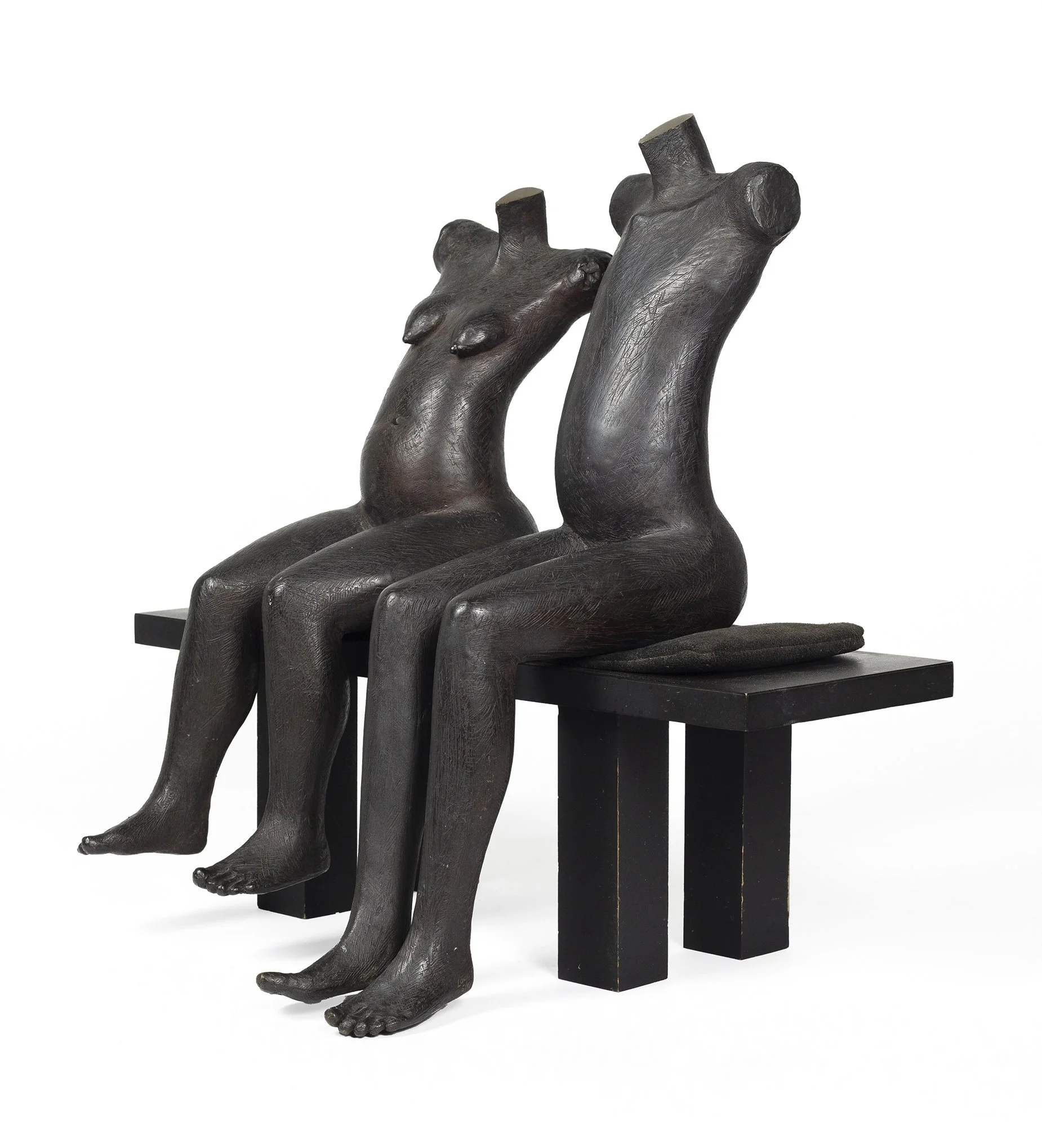
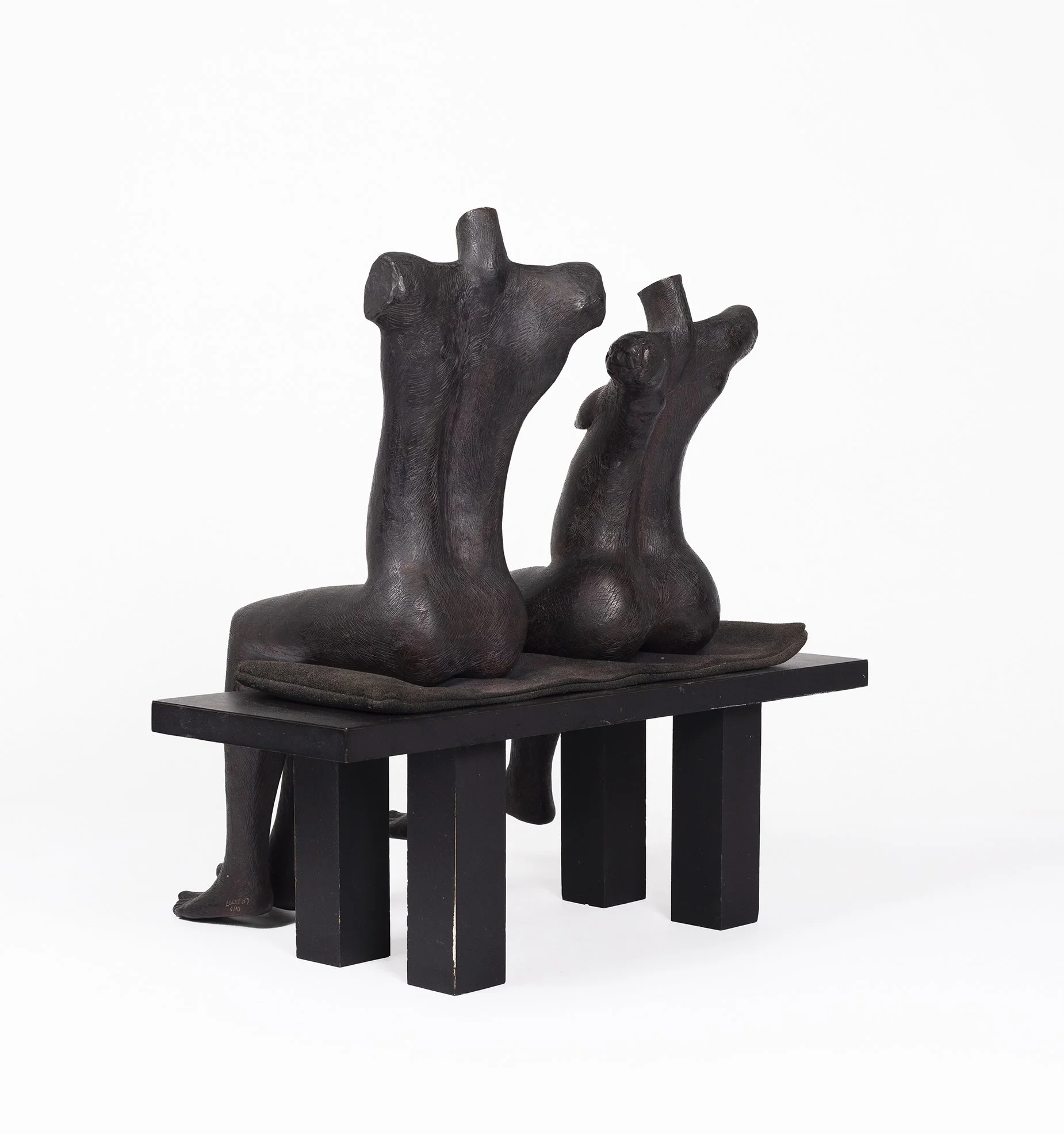
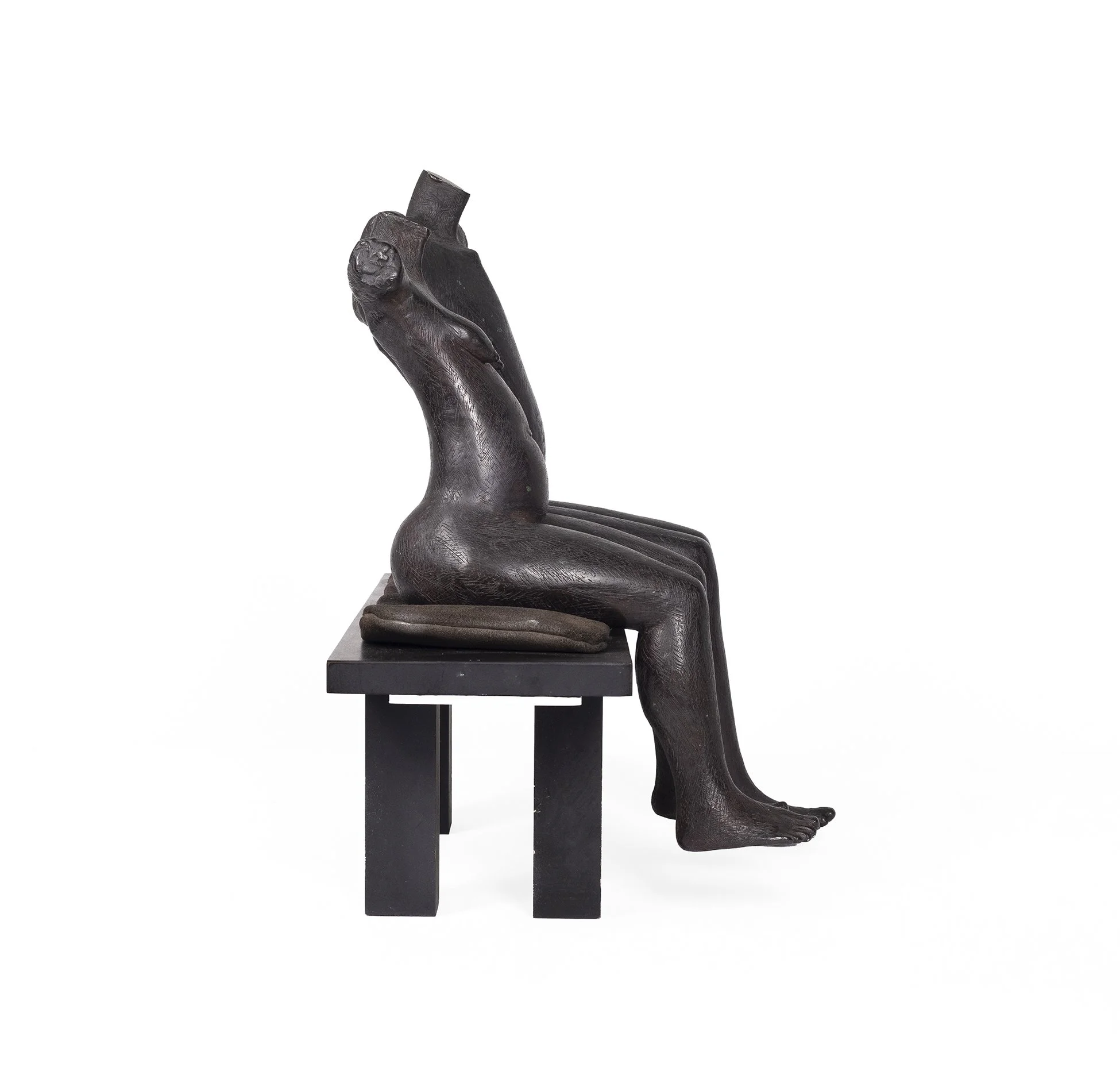
King and Queen (Homage to Moore)
1987
bronze, fabric, and wood
18-3/4 x 20 x 13-1/2 inches
signed, dated, and numbered, 5/10
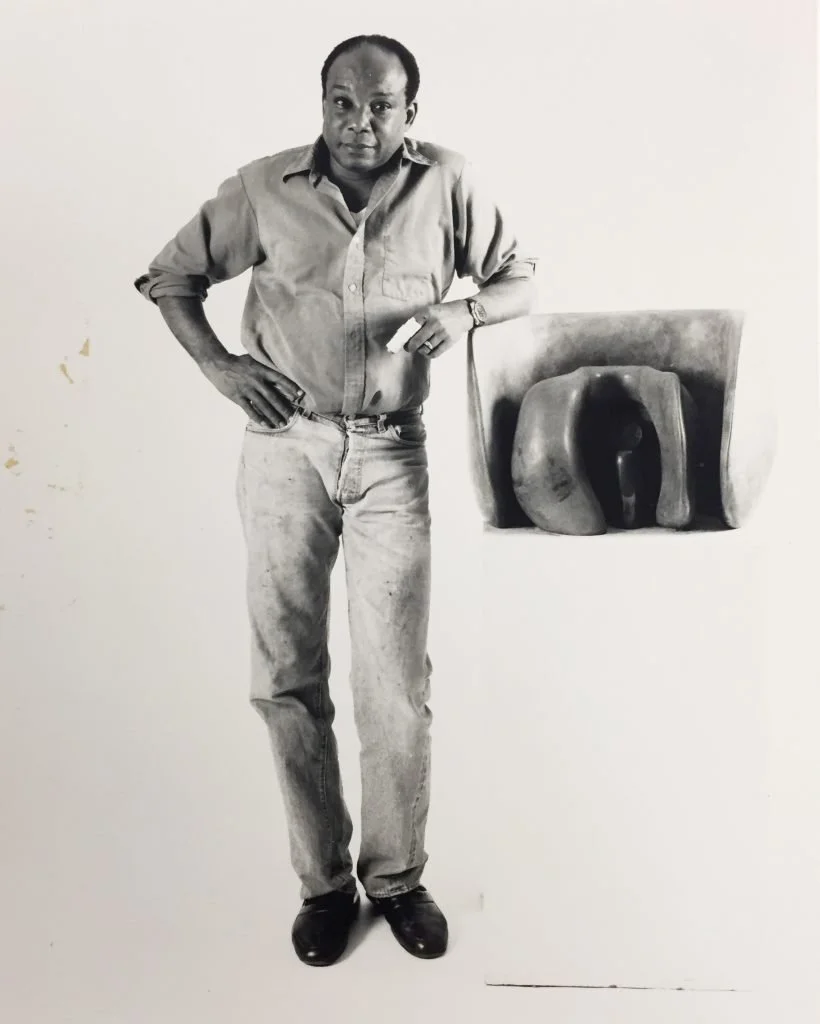
Sculptor, ceramicist, painter, and writer Donald Locke developed an experimental practice shaped by his life in Guyana, Britain, and the United States. His work brought modernist abstraction into conversation with colonial history, Caribbean folklore, and the experiences of the African diaspora. Moving freely among clay, bronze, wood, found objects, and painted surfaces, Locke explored how materials and forms could embody memory, cultural identity, and systems of power. His sculptures range from compact organic forms to complex assemblages that resist easy distinctions between sculpture, ceramics, and painting.
Born in Stewartville, British Guiana, now Guyana, in 1930, Locke began studying art in 1947 through the Working People’s Free Art Class led by Edward Rupert Burrowes in Georgetown. In 1954, a British Council scholarship enabled him to attend Bath Academy of Art in Corsham, England. His teachers included painters William Scott and Bryan Wynter, ceramicist James Tower, and sculptors Kenneth Armitage and Bernard Meadows. Further study at Edinburgh College of Art and the University of Edinburgh culminated in a master’s degree in fine art in 1964. He then returned to Guyana to teach at Queen’s College, participating in the country’s developing artistic culture during the years surrounding independence.
Ceramics remained fundamental to Locke’s work, offering possibilities beyond the functional vessel. His early sculptures explored rounded, swelling forms suggestive of bodies, plants, and organic growth. Returning to Britain around 1970, he increasingly combined ceramic elements with industrial and everyday materials. This experimentation produced works whose physical contrasts—between polished and rough surfaces, rigid structures and bodily forms—became central to their expressive character.
During the 1970s, Locke developed his important Plantation Series, encompassing both sculpture and painting. Grids, barriers, repeated forms, and dark surfaces recalled the organization of plantation landscapes and the structures through which people were held in economic and political subordination. In Trophies of Empire (1972–1974), ceramic and mixed-media forms occupy a wooden cabinet, turning the format of collection and display into a charged consideration of empire. These works demonstrate how Locke could use abstract arrangement to address histories embedded in both landscapes and institutions.
A Guggenheim Fellowship brought Locke to Arizona in 1979. During the following decade, he continued developing anthropomorphic and figurative sculptures in clay and bronze while returning increasingly to painting and collage. In 1990, he settled in Atlanta, where encounters with African American vernacular art encouraged further experimentation. His large mixed-media paintings incorporated photographs, wood, metal, and other found materials, extending his sculptural thinking onto the picture surface. In his final years, renewed work in ceramics brought clay together with branches, fur, horns, and other textured elements, drawing upon the folklore and imaginative traditions that had long informed his practice.
Locke’s work appeared in landmark exhibitions including The Other Story: Afro-Asian Artists in Post-War Britain at London’s Hayward Gallery in 1989 and Back to Black at the Whitechapel Gallery in 2005. He died in Atlanta in 2010. His art is held in collections including Tate, the Victoria and Albert Museum, the Fitzwilliam Museum, the Studio Museum in Harlem, and the High Museum of Art.
Recent exhibitions have brought renewed attention to the breadth of his achievement. Donald Locke: Nexus, curated by Grace Aneiza Ali at Atlanta Contemporary in 2024–2025, examined connections across his fifty-year career, with particular attention to his productive Atlanta years. The major survey Donald Locke: Resistant Forms traveled from Spike Island in Bristol and Ikon Gallery in Birmingham in 2025 to Camden Art Centre in London in 2026. Together, these presentations affirm Locke’s contribution to sculpture and to an understanding of modern art shaped by migration, cultural exchange, and the continuing legacies of colonialism.