Beverly Buchanan
(1940-2015)
“My work is about, I think, responses. My response to what I’m calling GROUNDINGS. A process of creating objects that relate to but are not reproductions of structures, houses mainly lived in now or abandoned that served as home or an emotional grounding. What’s important for me is the total look of the piece. Each section must relate to the whole structure. There are new groundings, but old ones help me ask questions and see possible stories as answers. Groundings are everywhere. I’m trying to make houses and other objects that show what some of them might look like now and in the past.”
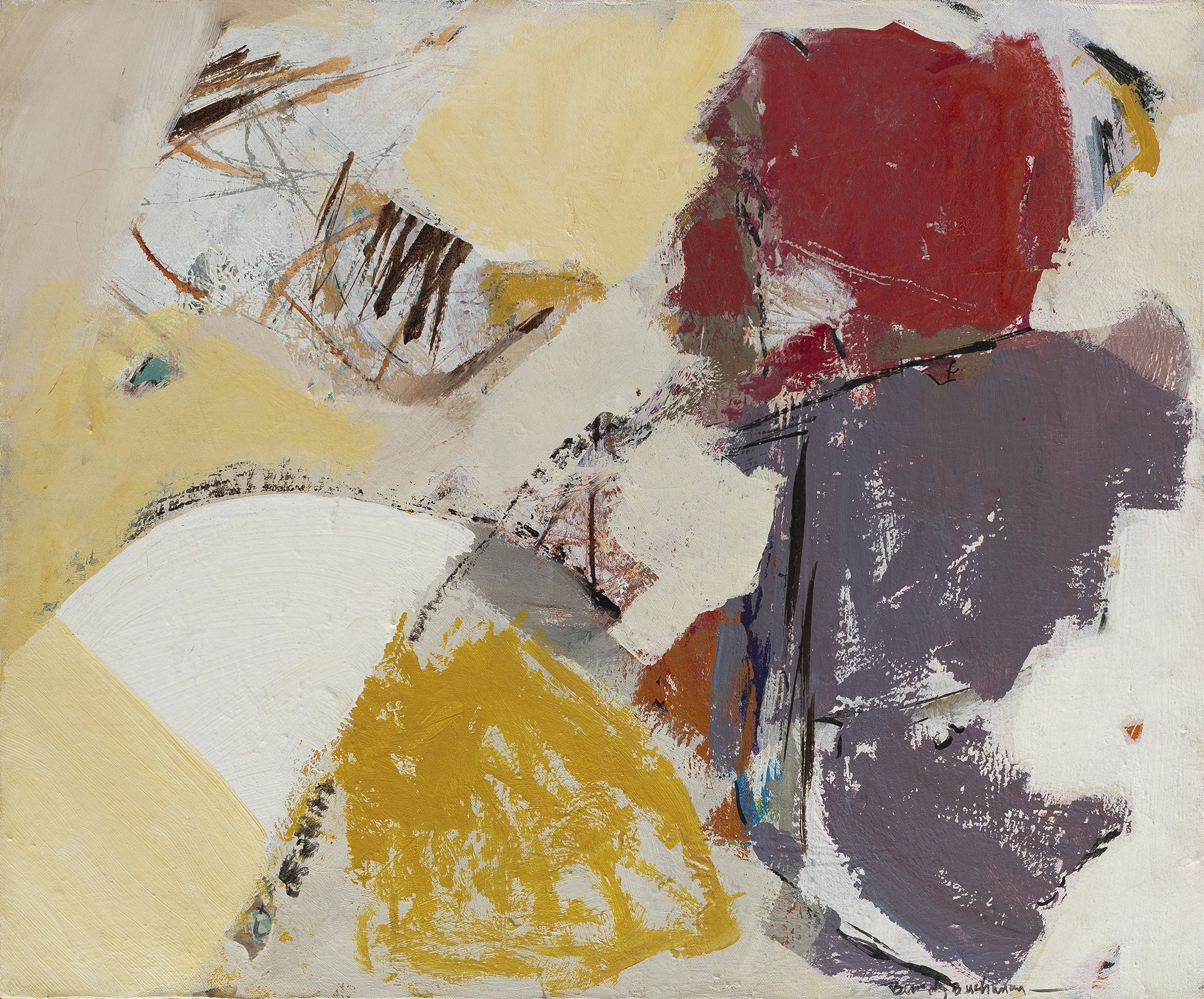
Fall Line Series 1,
1982
acrylic on canvas
20 x 24 inches
signed; titled, dated and signed again verso
label from Hammonds House Museum
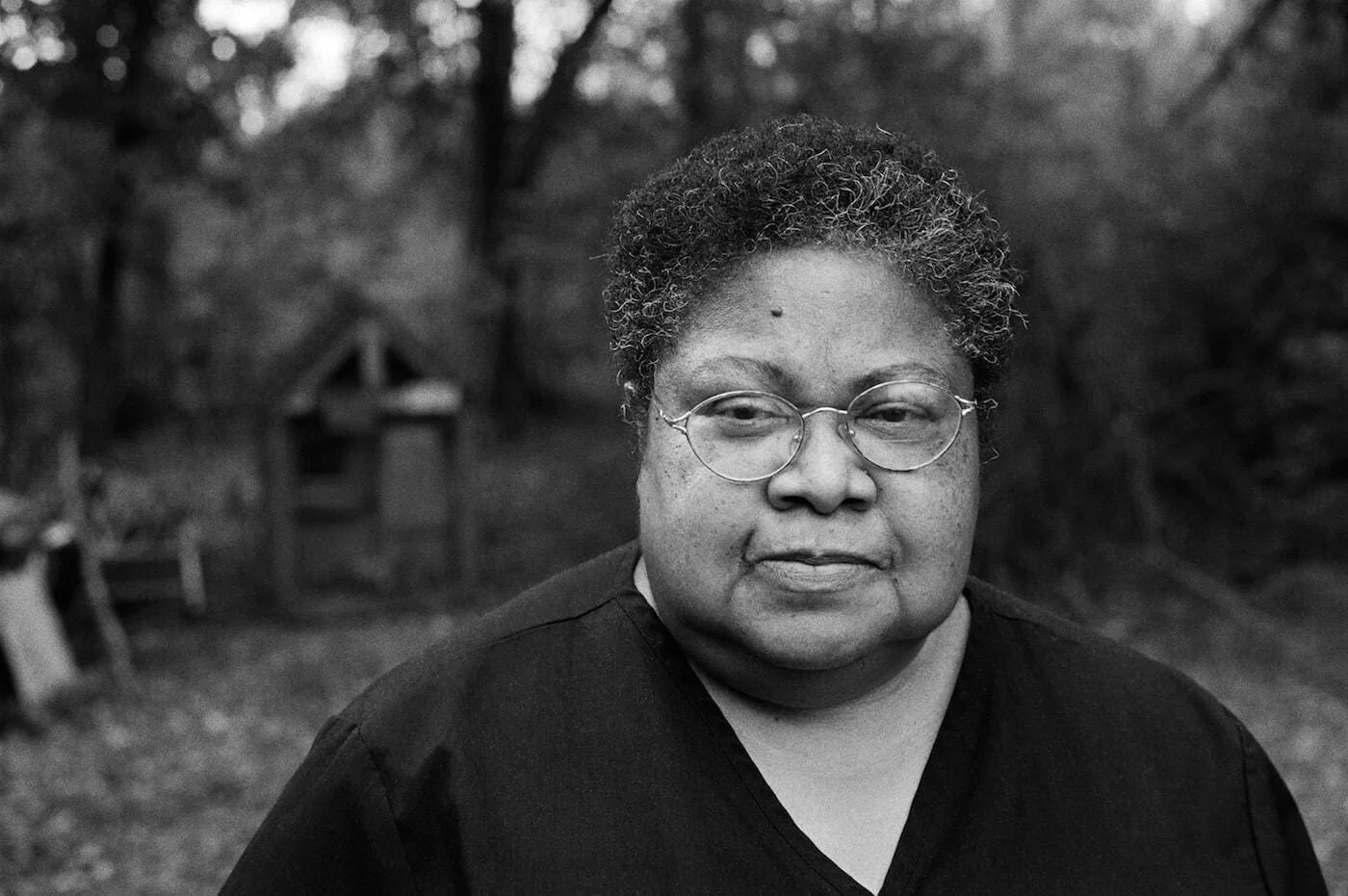
“… a lot of my pieces have the word ‘ruins’ in their titles because I think that tells you this object has been through a lot and survived—that’s the idea behind the sculptures…it’s like, ‘Here I am; I’m still here!’ ”
Jerry Siegel: Beverly Buchanan, Athens, GA, 2000. Archival inkjet print. 11.3 x 17 inches. (Courtesy the artist and Museum of Contemporary Art of Georgia.)
Born on October 8, 1940, in Fuquay, North Carolina, Beverly Buchanan was adopted by Marion and Walter Buchanan. She grew up in Orangeburg, South Carolina, where her adoptive father, then dean of agriculture at South Carolina State College, introduced her to tenant farming communities. The trips to these farms with her father left a lasting impression on her, which eventually took root in her artistic practice.
She initially pursued a career in science: Buchanan earned a B.A. in medical technology from Bennett College, followed by master’s degrees from Columbia University in parasitology and public health. She worked for years as a medical technician and public health educator in New York and New Jersey. But in the early 1970s, Buchanan, who had been accepted to medical school, chose to indulge her artistic side, driven by a desire to “express the images, stories, and architecture of her African American childhood” (1)
In 1971, she enrolled at the Art Students League in New York, studying under Norman Lewis. There, she met Romare Bearden, who became a mentor and connected her with the artist-run Cinque Gallery, marking a pivotal step toward her full-time art career. By 1977, Buchanan committed fully to art, moving to Macon, Georgia, to teach and immerse herself in the Southern landscape.
The sharecropper’s shack is a recurring motif in Buchanan’s work and appears across a variety of mediums including painting, sculpture, video, land art, assemblage, and found objects. For Buchanan, these structures served as a “metaphor for the triumph of the human spirit over poverty and adversity.” (2.)
One of her most significant works, Marsh Ruins (1981), was a land art intervention using concrete and tabby (a composite of lime, water, sand, oyster shells, and ash).
“In 1981, Buchanan strategically placed her Georgia land work Marsh Ruins near the site of the 1891 mob lynching of Wesley Lewis and Henry Jackson, and overlooking St. Simons Island, where a group of Igbo people sold into slavery drowned themselves in 1803.” (3)
In addition to the location of the work, her use of tabby had a greater historical significance as well. Tabby was used throughout the American South to construct shacks and quarters for enslaved people. Her installation was meant to shift and disintegrate with time.
References:
Klacsmann, Karen. "Beverly Buchanan." New Georgia Encyclopedia, last modified Mar 22, 2021. https://www.georgiaencyclopedia.org/articles/arts-culture/beverly-buchanan-1940-2015/
Gregory, Alicia. “5 Fast Facts: Beverly Buchanan: Broad Strokes Blog.” National Museum of Women in the Arts, 15 Dec. 2024, nmwa.org/blog/5-fast-facts/5-fast-facts-beverly-buchanan/.
ibid.
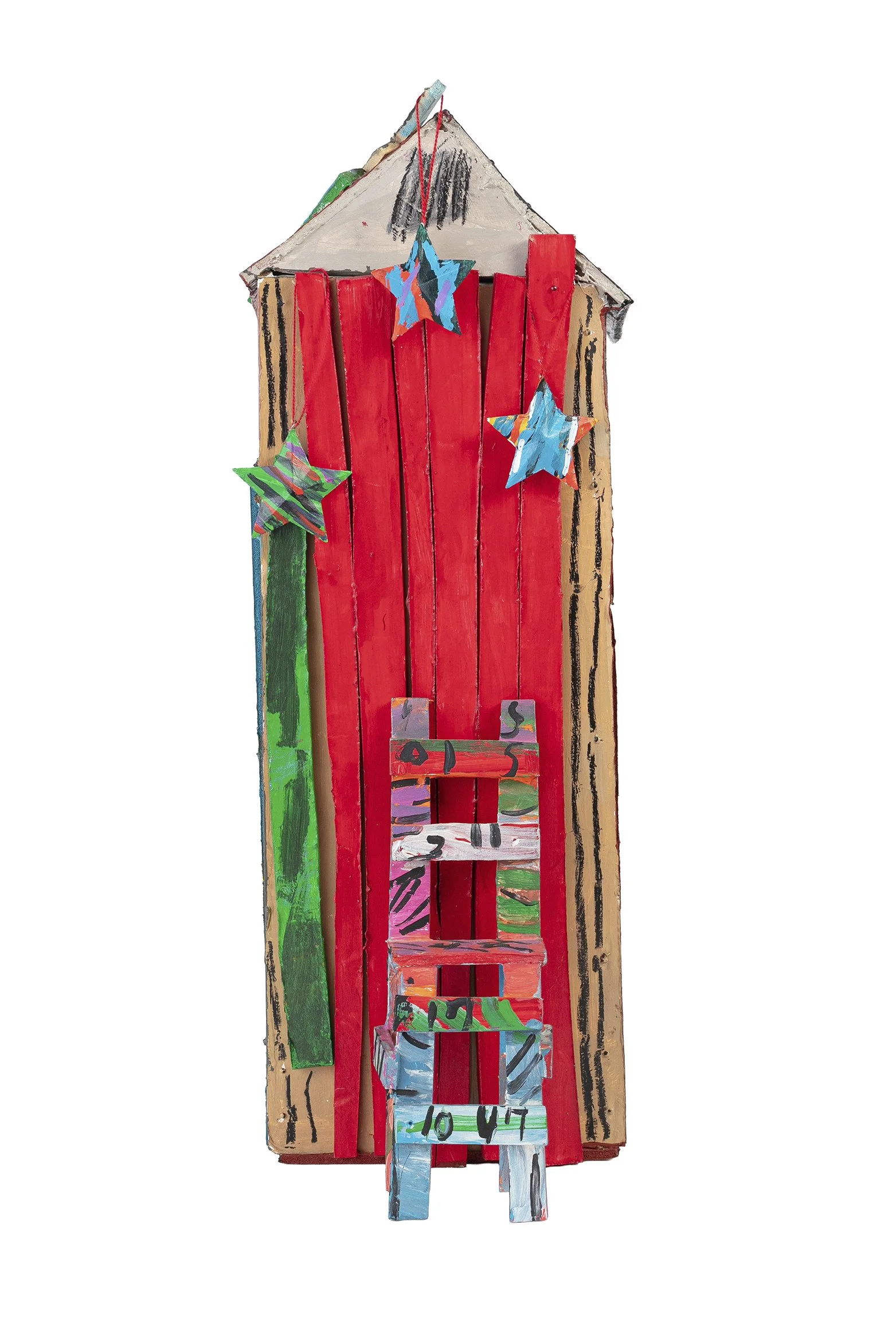
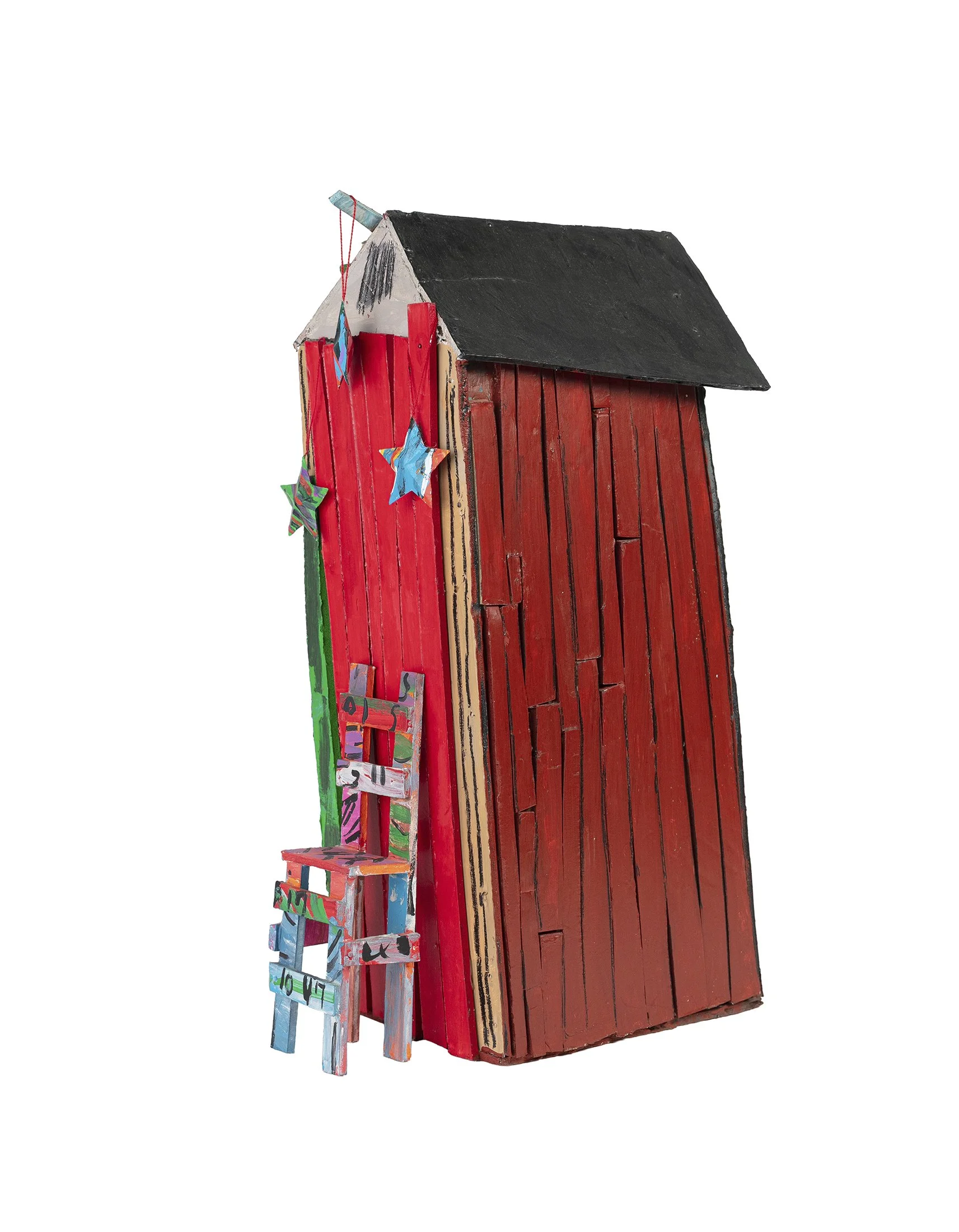
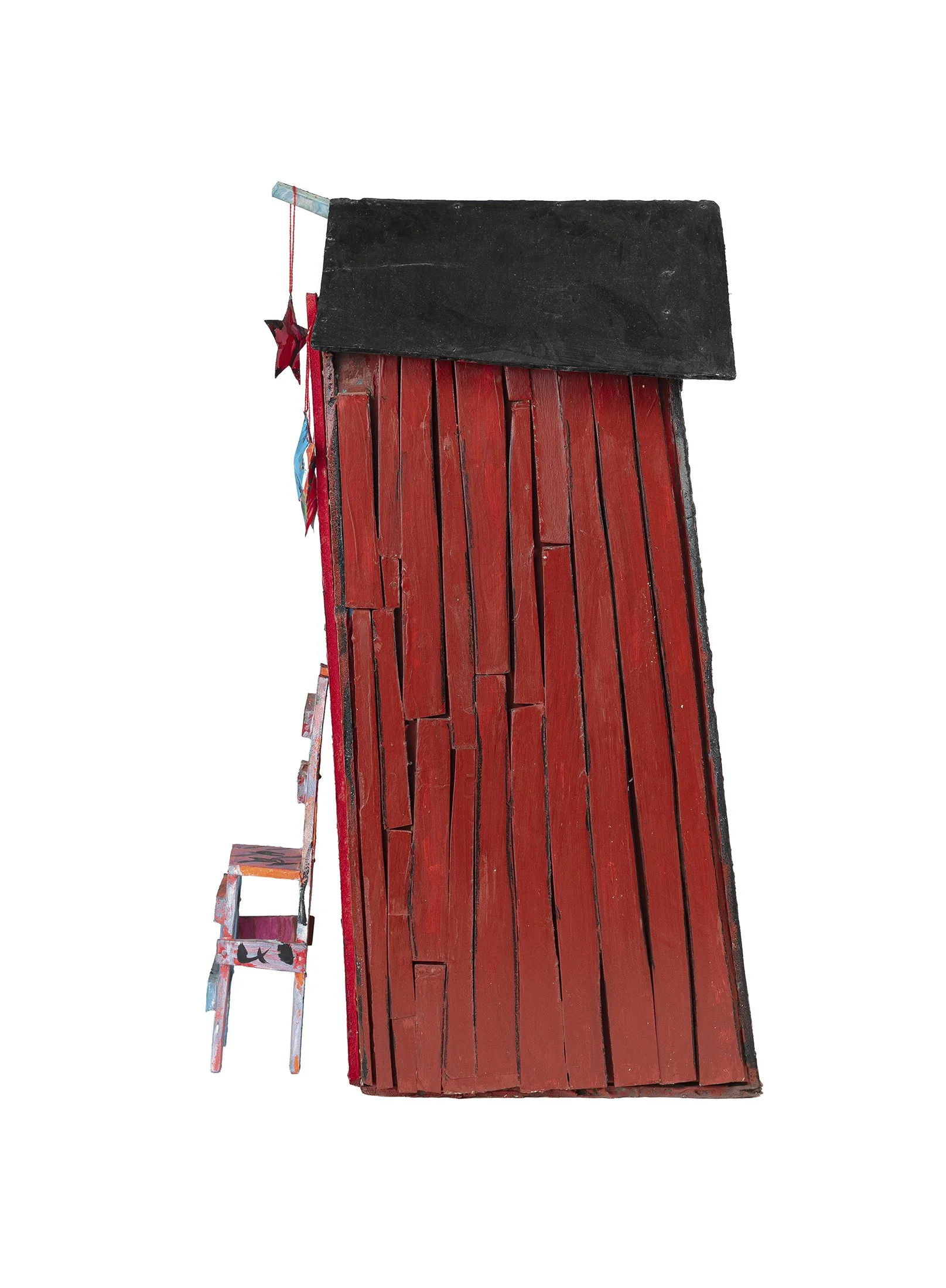
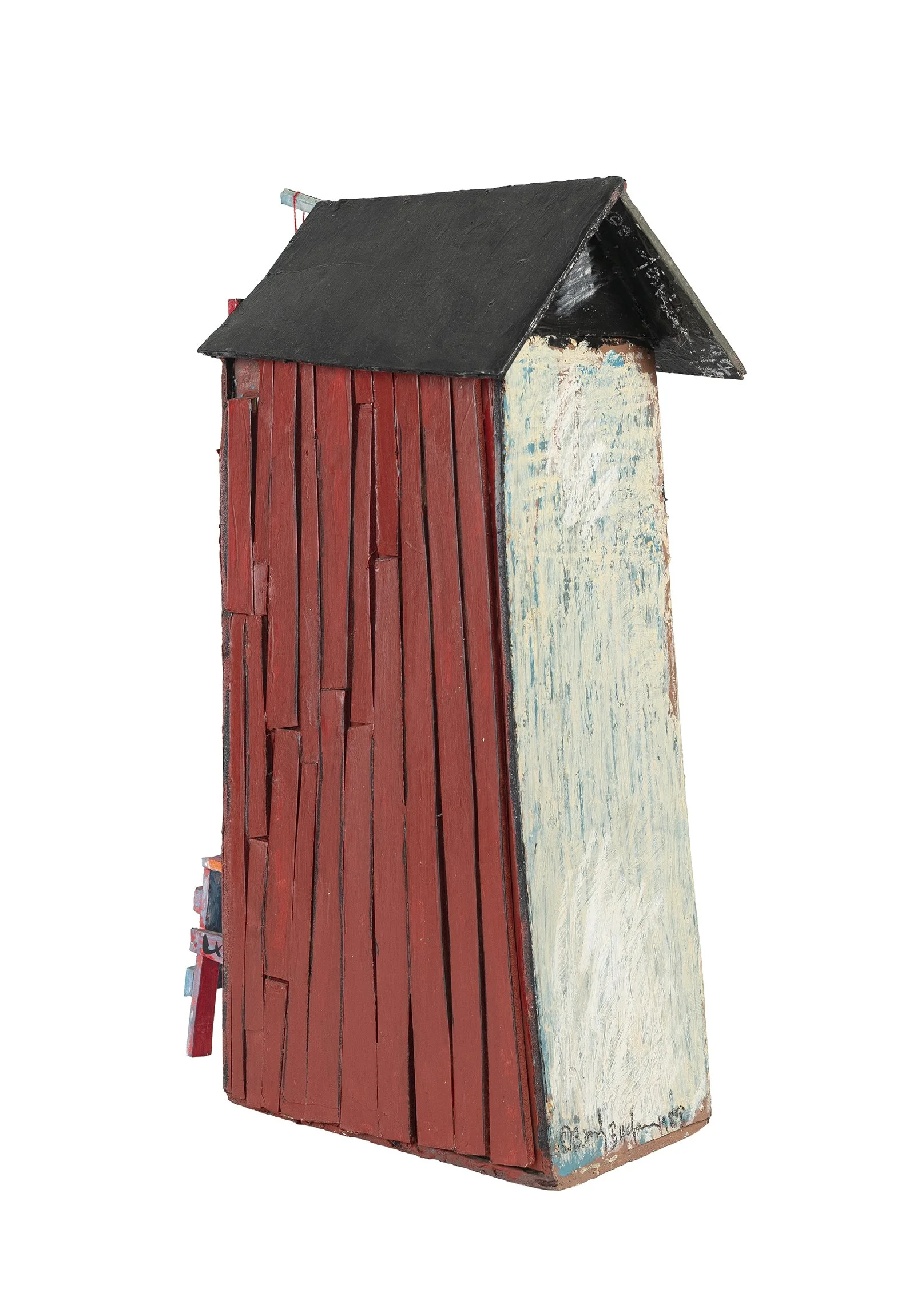
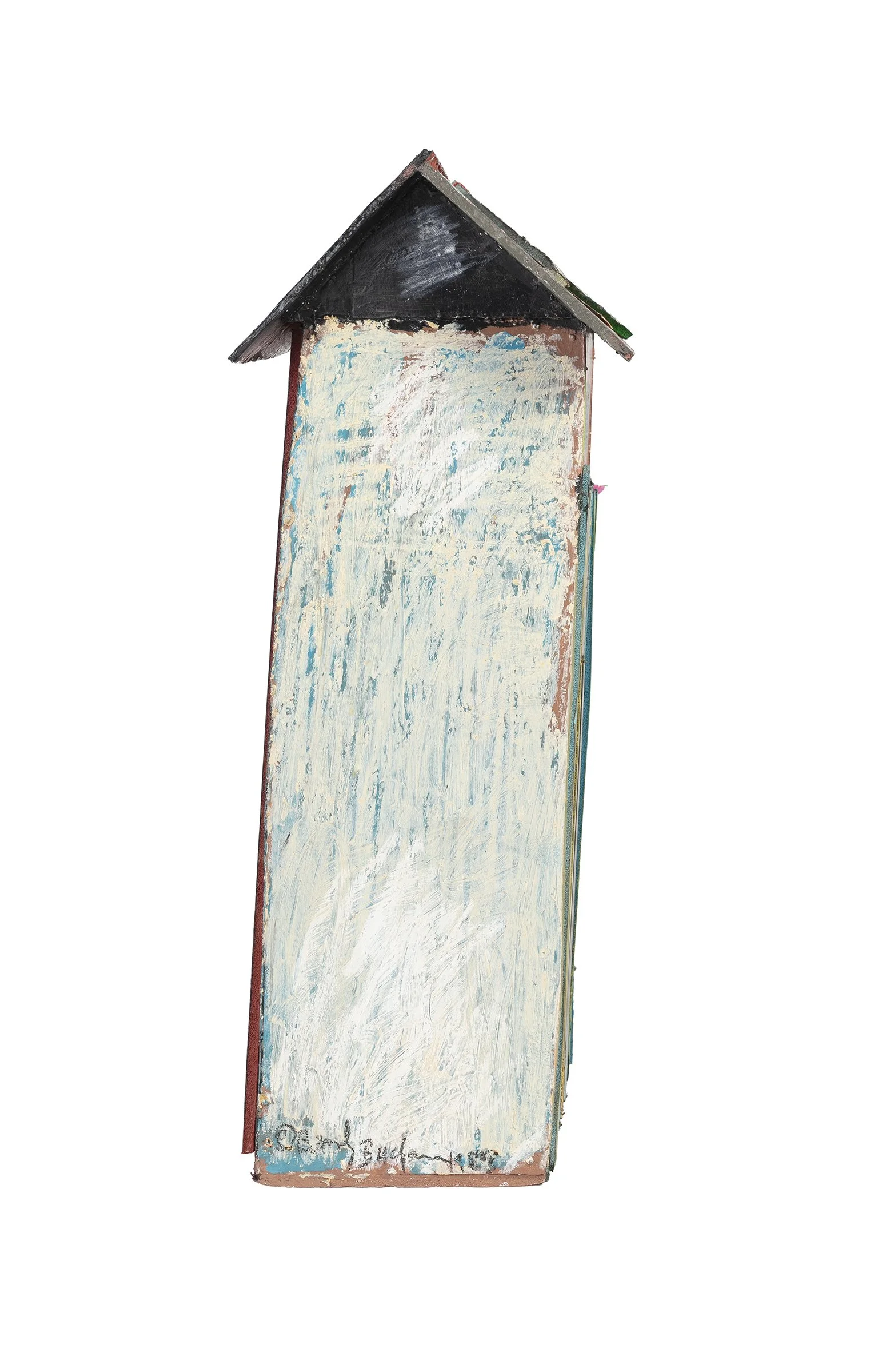
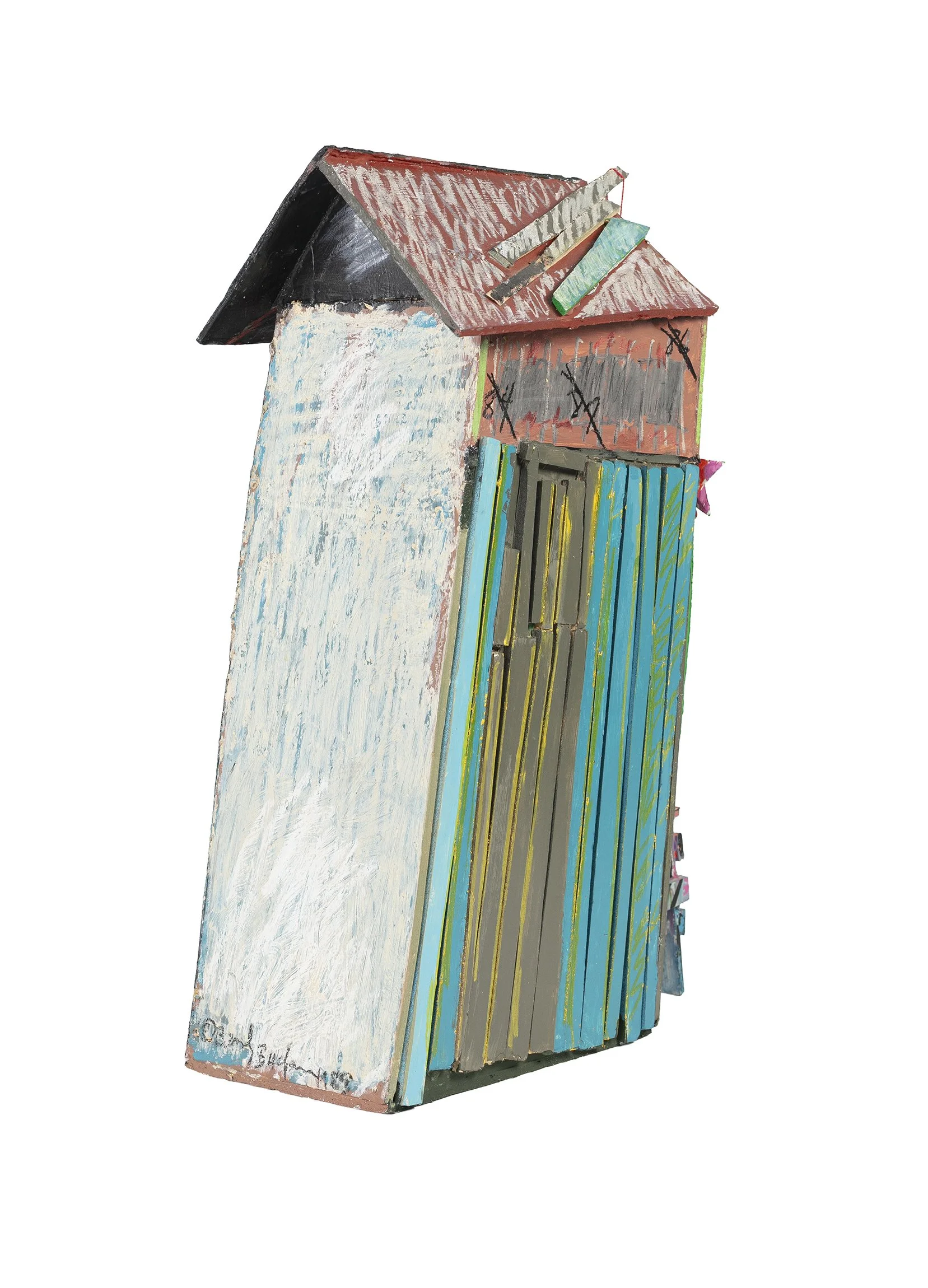
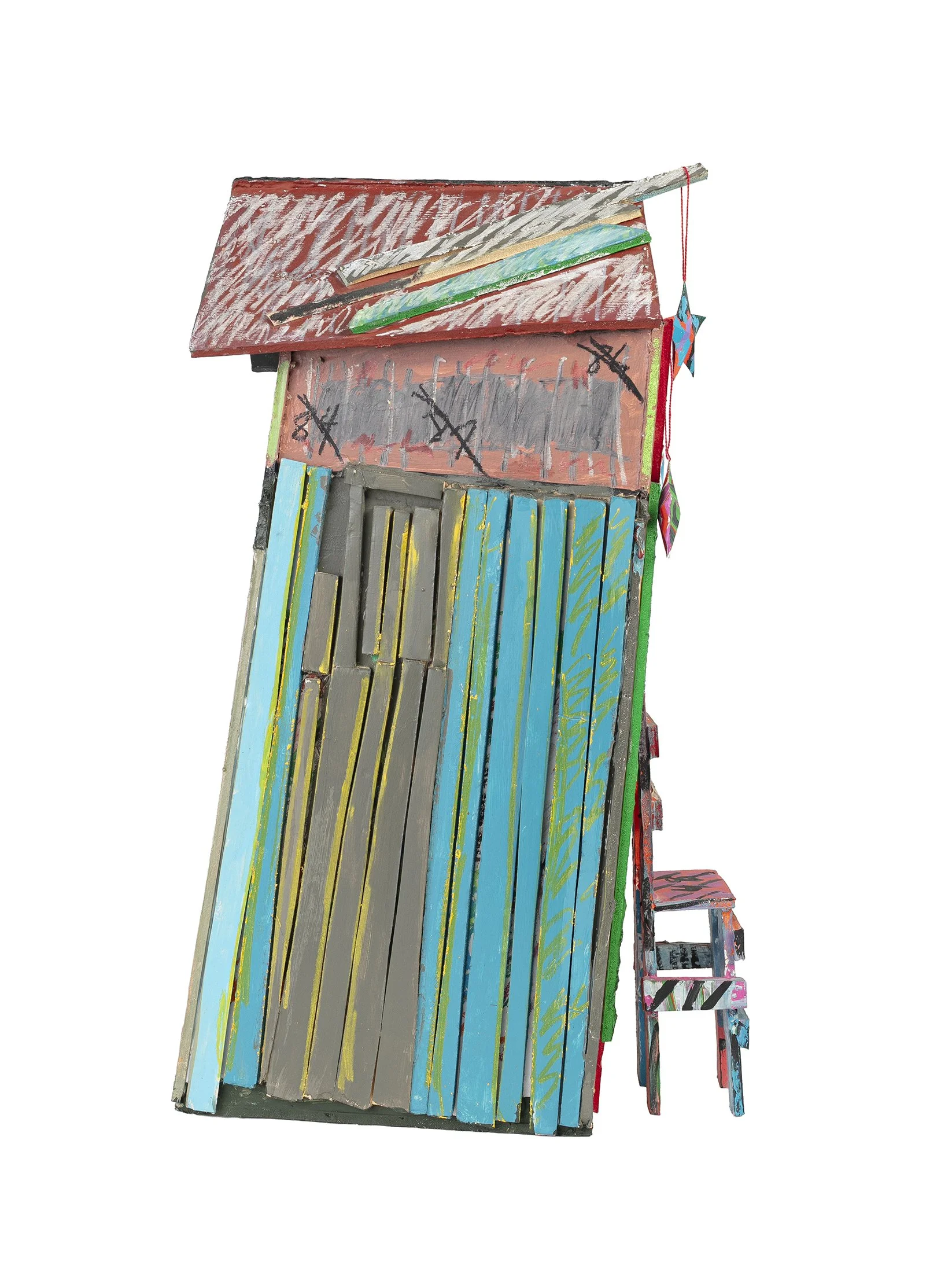
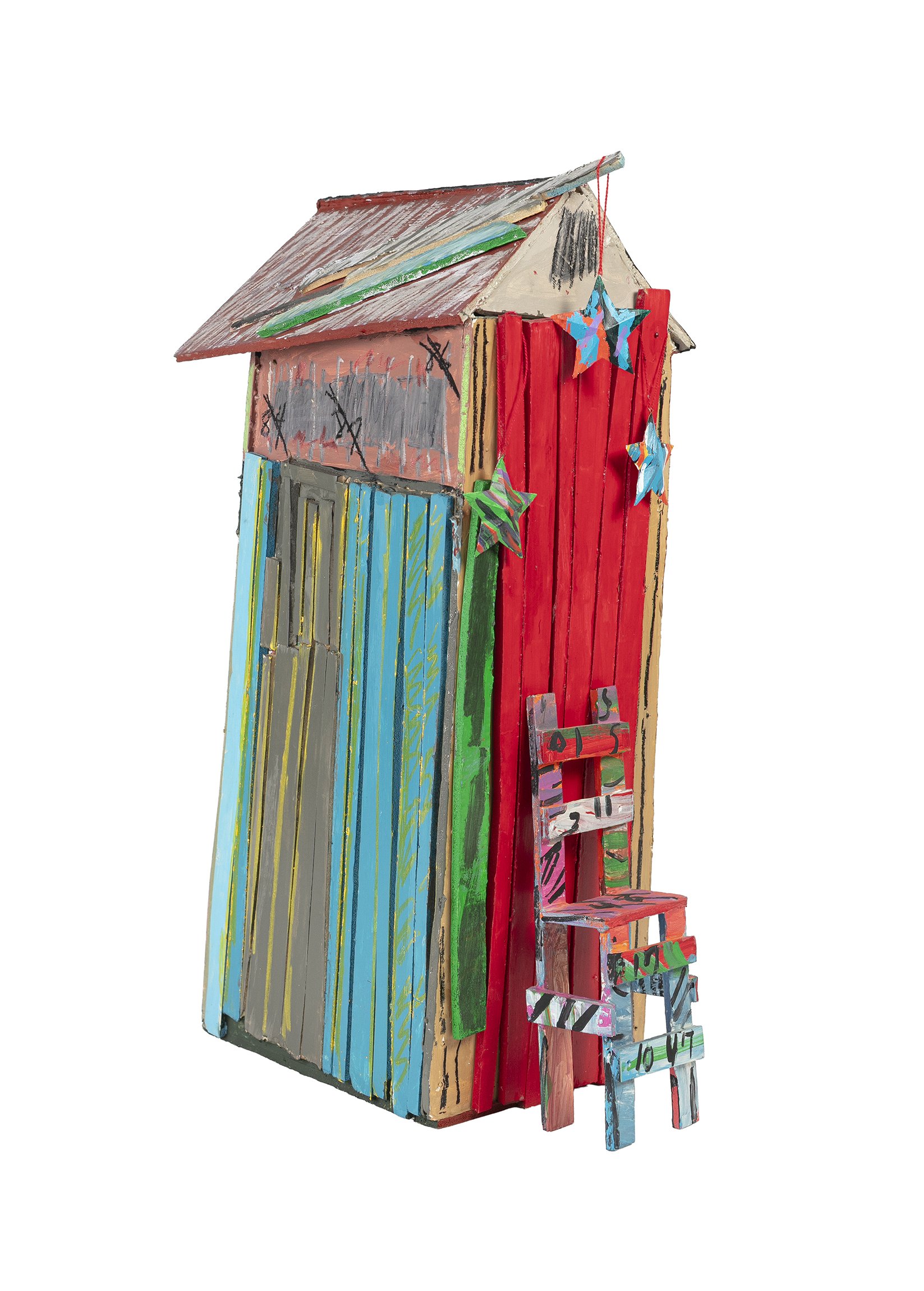
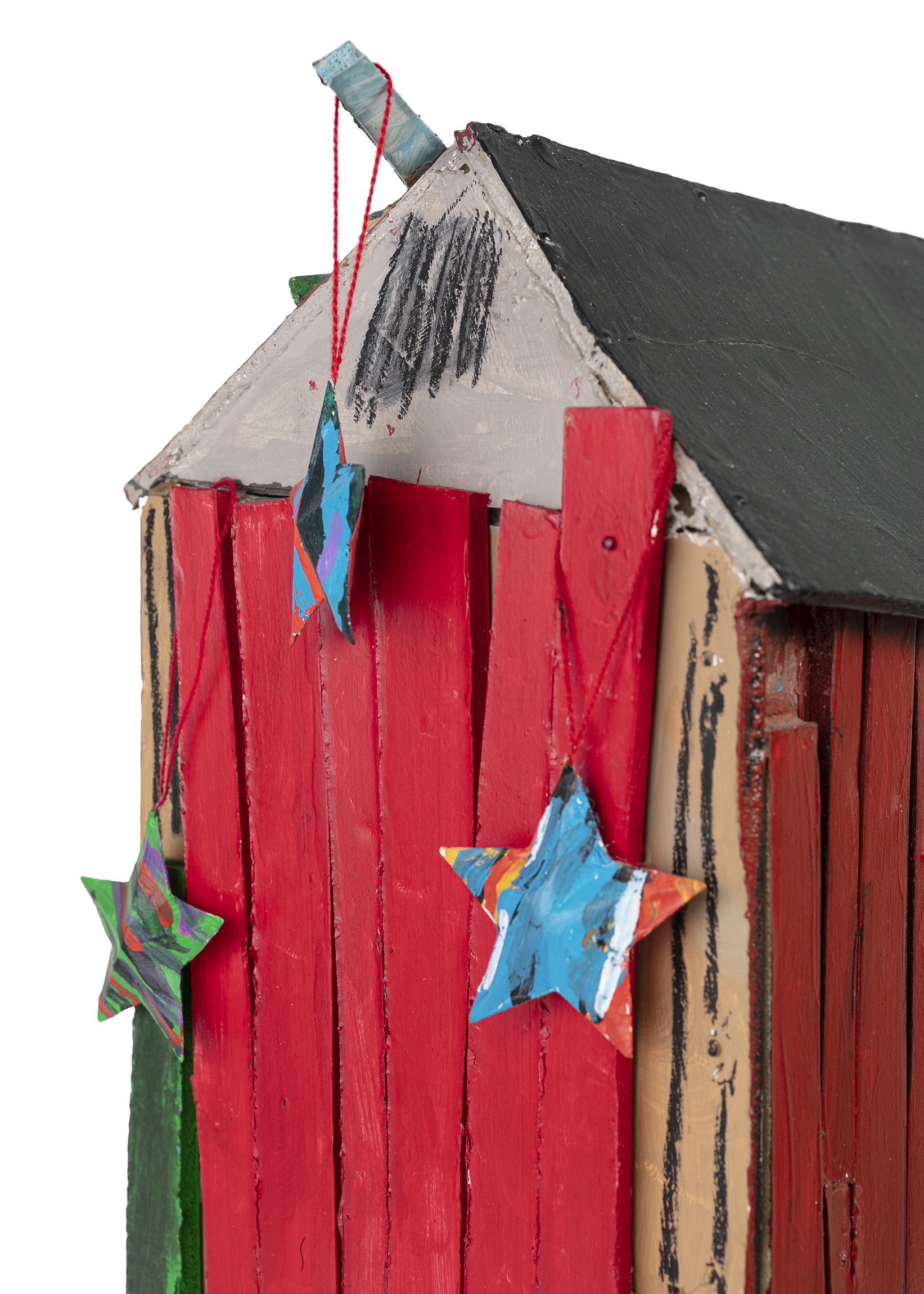
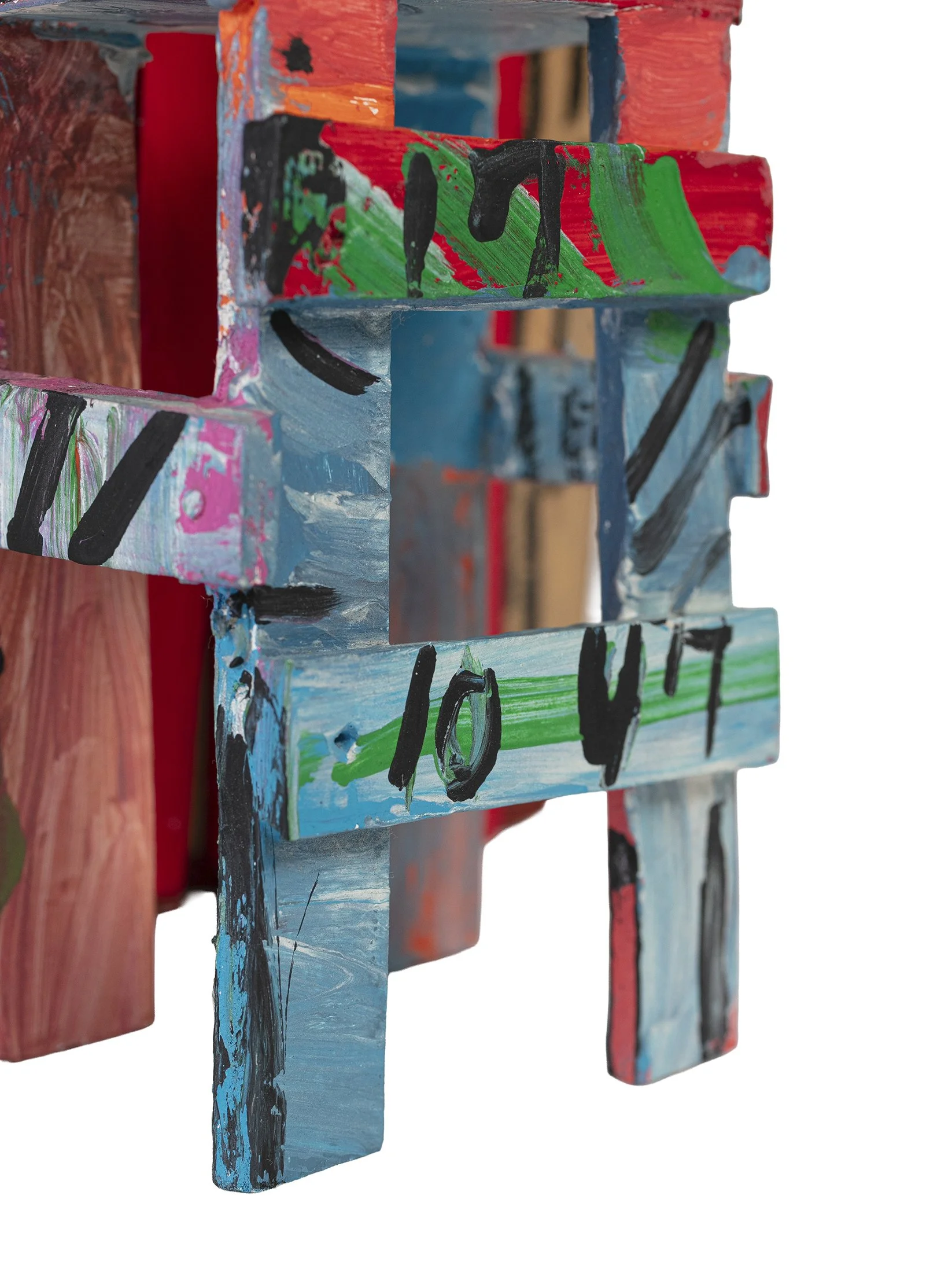
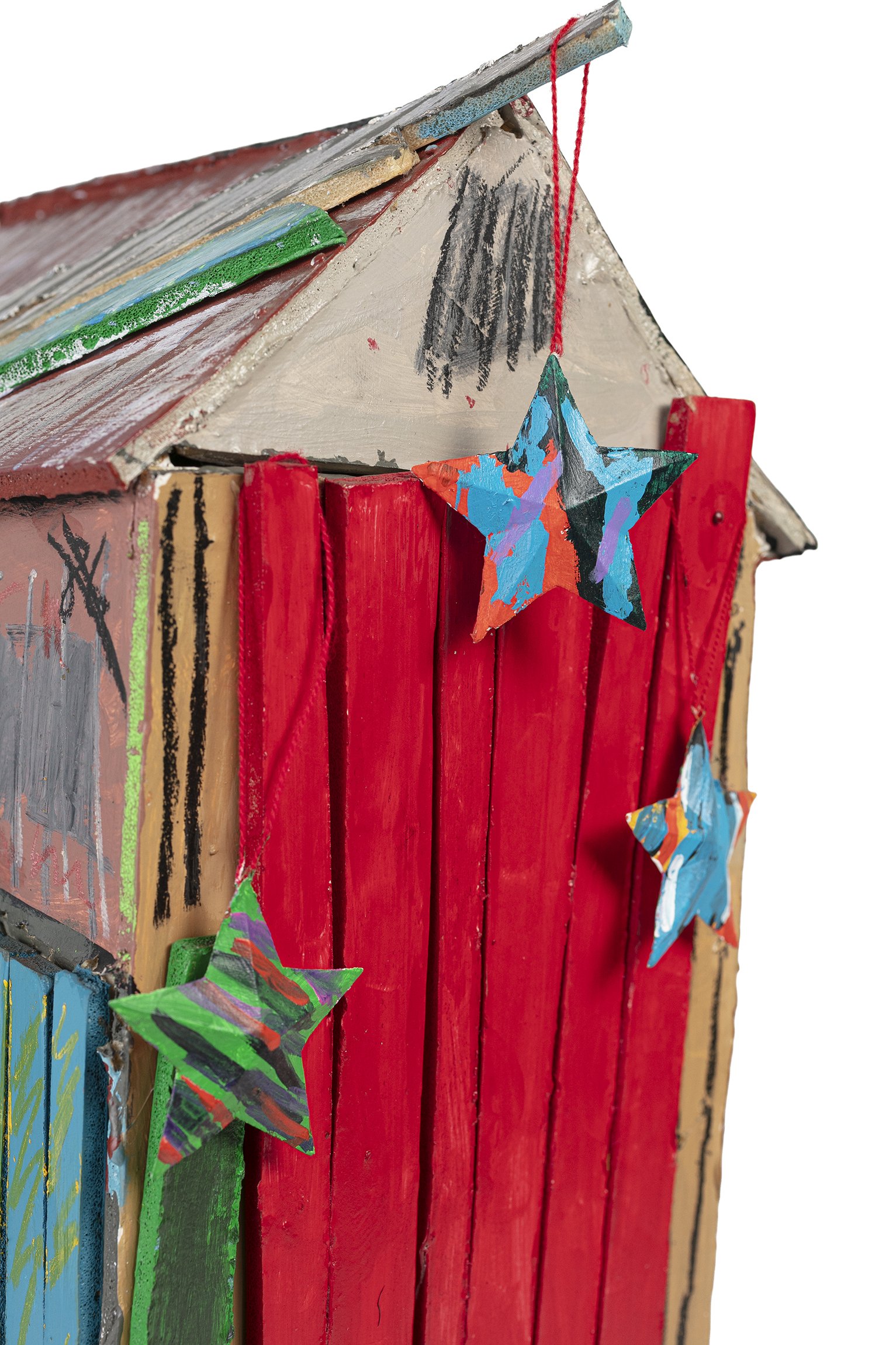
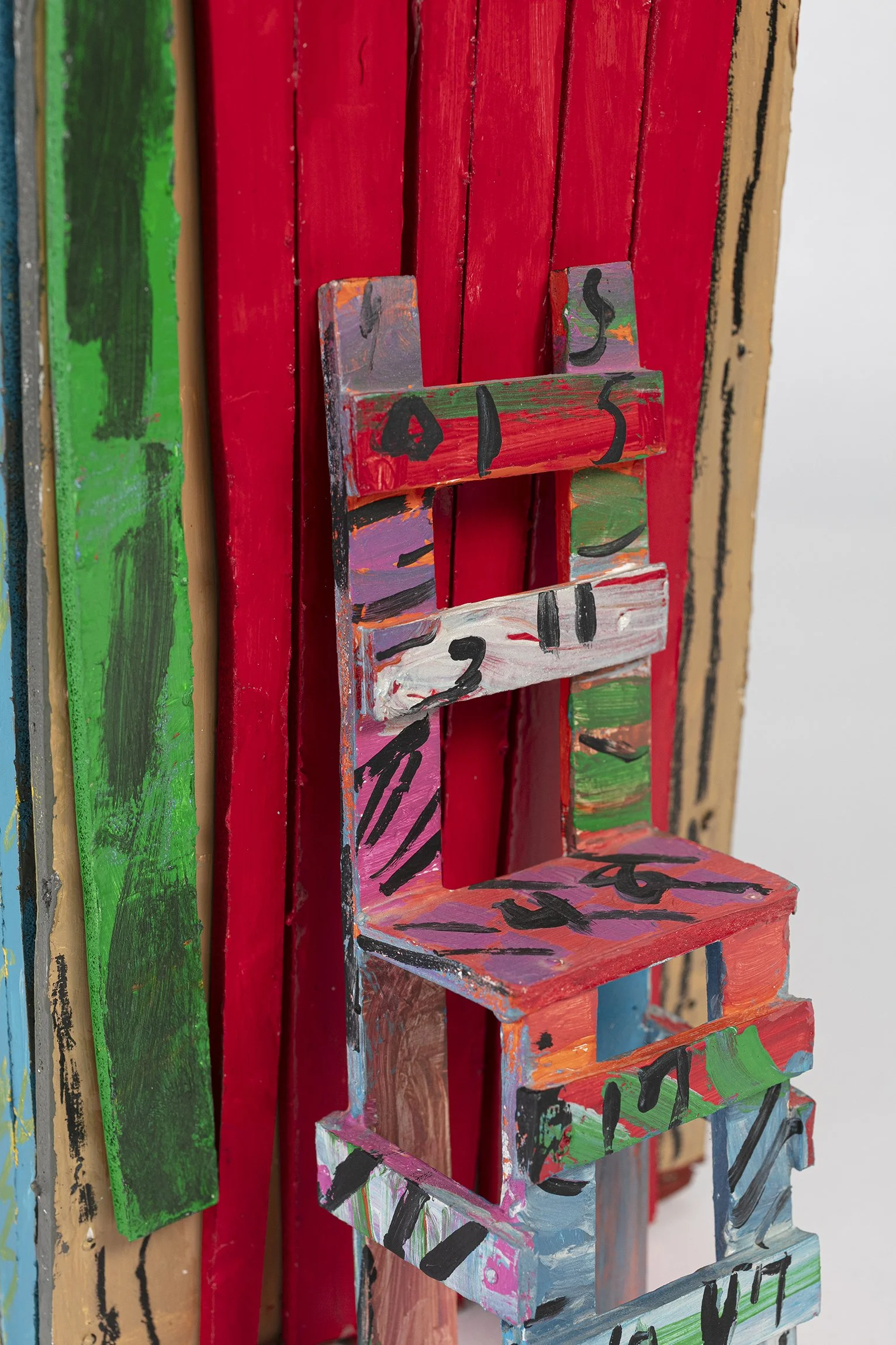
Shack With Chair
1989
acrylic, foam board, and red thread
20-1/2 x 7 x 11 inches
signed and dated on verso
Exhibited and illustrated: The Postman Collects, The Rapture of Kerry and C. Betty Davis, Clark Atlanta University Art Galleries, 2016. (p. 25 in the catalog accompanying the exhibit).
2026 Exhibitions
In Minor Keys: 61st International Art Exhibition of La Biennale di Venezia
Venice, Italy, May 9–November 22, 2026
Buchanan receives unusually prominent treatment: the Central Pavilion includes a “Shrine” devoted to her work, pairing her legacy with that of Senegalese artist Issa Samb. The presentation emphasizes her anti-monumental approach to land art, public sculpture, place, and historical memory.
Beverly Buchanan: Impermanences, with Hélène Yamba-Guimbi
FRAC Lorraine, Metz, France, February 27–August 26, 2026
This substantial presentation surveys Buchanan’s engagement with ruins, vernacular architecture, slavery, landscape, and impermanence. It is part of the European project also presented under the title Weathering.
Circularity
Nevada Museum of Art, Reno, February 21–November 29, 2026
This group exhibition examines reuse, recycling, and regeneration. Buchanan is represented by House from Scraps (2011), constructed from wood and copper.
Ernst Choice—Volume 2
Galerie Ernst Hilger, Vienna, Austria, July 9–September 2, 2026
A group exhibition featuring Buchanan alongside artists from the gallery’s broader program.
Coming Soon
Divination: Beverly Buchanan & Dionne Lee
Contemporary Arts Museum Houston, September 4, 2026–February 14, 2027.
The exhibition places Buchanan’s archives, photographs, writings, and video in dialogue with Lee’s contemporary work addressing Black identity and the American landscape.
Beverly Buchanan: Weathering
Spike Island, Bristol, September 26, 2026–January 31, 2027.
Billed as the first European survey of Buchanan’s work, it will bring together five decades of sculpture, painting, drawings, earthworks, books, and archival material.
Selected Exhibitions
The Dialectics of Isolation: An Exhibition of Third World Women Artists in the United States; A.I.R. Gallery, New York, NY, 1980
Ritual and Myth: A Survey of African American Art; Studio Museum of Harlem, New York, NY, 1982
The Decade Show: Frameworks of Identity in the 1980s; New Museum of Contemporary Art, Museum of Contemporary Hispanic Art, and Studio Museum in Harlem, NY, 1990
African American Art: The Paul R. Jones Collection; University of Delaware, Newark, 1993
Bearing Witness: Contemporary Works by African-American Women Artists; Spelman College Museum, Atlanta, GA, 1996
Resonant Forms: Contemporary African American Women Sculptors; Anacostia Museum and Center for African American History and Culture, Washington, DC, 1998
Re/righting History: Counternarratives by Contemporary African-American Artists; Katonah Museum of Art, NY, 1999
The Chemistry of Color: Contemporary African-American Artists; Columbia Museum of Art, SC, 2010
When the Stars Begin to Fall: Imagination in the American South; Studio Museum in Harlem, NY, 2014
Group
Cinque Gallery, New York, NY, 1972
Beverly Buchanan; Mercer University, Macon, GA, 1977
Beverly Buchanan (solo exhibition of shack sculptures); Southeastern Center for Contemporary Art, Winston-Salem, NC, 1989
BEVERLY BUCHANAN: In Celebration of Improvisational Architecture; Schering-Plough Headquarters Gallery, Madison, NJ, 1992
BEVERLY BUCHANAN: ShackWorks, A 16-Year Survey; Montclair Art Museum, NJ, 1994
Response and Memory: The Art of BEVERLY BUCHANAN; Asheville Art Museum, NC, 2009
All in the Family: Improvisational Architecture of BEVERLY BUCHANAN; Center for Afro-American and African Studies, University of Michigan-Ann Arbor, MI, 2013
Beverly Buchanan: Ruins and Rituals; Brooklyn Museum, NY, 2017
Beverly Buchanan: To Capture Something Closely Related to a Feeling; The Gund, Kenyon College, Gambier, OH, 2024
Remains Beverly Buchanan, James Castle, Cathy Lebowitz, Liz Magor, Monique Mouton, Em Rooney; Bureau, NY, January 10 - February 15, 2025